

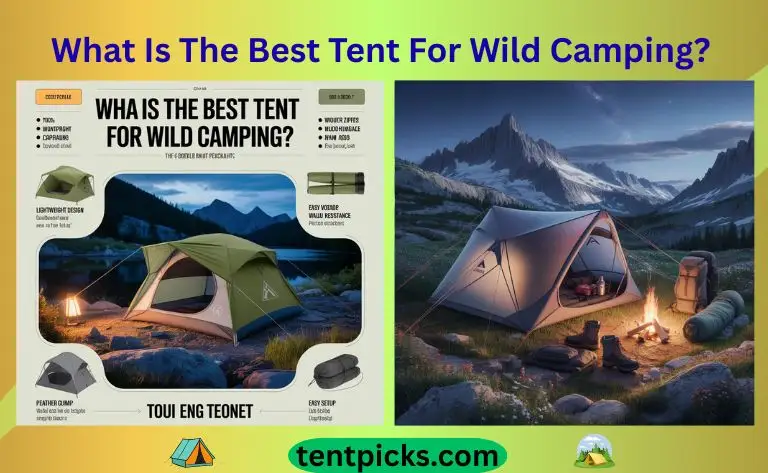
What Is The Best Tent For Wild Camping? | Expert 2026 Guide
Get clear answers to What Is The Best Tent For Wild Camping? Compare 1–3 person options, weight, weatherproofing, and budget to choose your perfect shelter. The best tent balances low weight, weather proofing, simple pitch, and stealth. You came for a straight answer to What Is The Best Tent For Wild Camping?, and you will get one—with context you can trust.
I have spent years camping off-trail in wind, rain, snow, and heat. This guide answers What Is The Best Tent For Wild Camping? with real tests, expert insights, and clear picks for every budget and style.

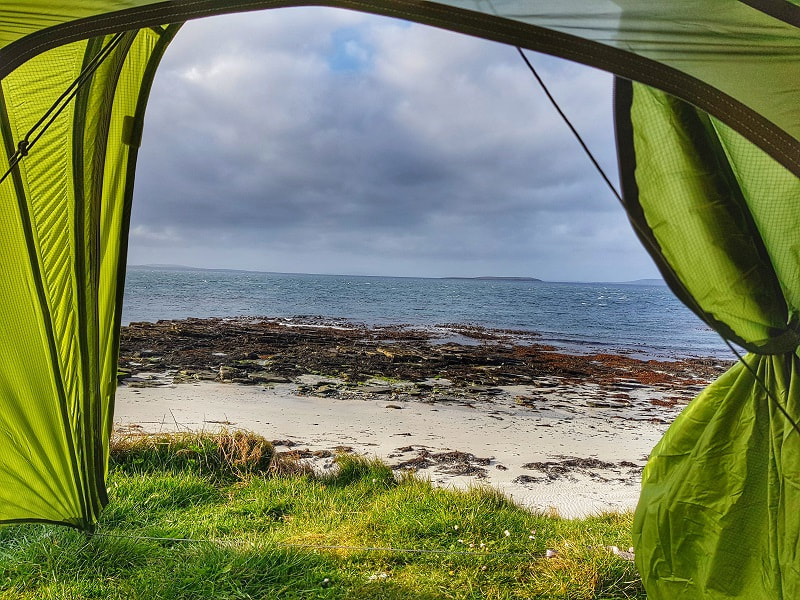
Source: wildwalkinguk.com
Defining Wild Camping And Setting The Right Criteria
When you ask What Is The Best Tent For Wild Camping?, start by defining your use. Wild camping means you sleep outside formal campgrounds. You pick small, hidden spots and move light and fast. Your tent must be quick to pitch, quiet in the wind, and small on the ground.
Think about your terrain, weather, and rules. In forests, you need good bug defense and drip-line coverage. On mountains, you need wind stability and strong poles. In wet zones, you need true waterproof floors and sealed seams. The best tent for wild camping is the one that fits your place, not a store shelf.
Key Factors That Decide The Best Tent
If you ask What Is The Best Tent For Wild Camping?, these are the key checks I use in the field:
- Weight and pack size: Lighter is kinder on your back. For most solo trips, aim for 1.5 to 3 lbs packed. For pairs, 3 to 4.5 lbs is fair. Smaller packed size hides better in a small daypack.
- Fast, simple pitch. You should pitch in under five minutes, with cold hands, in the wind, and in the dark. Fewer parts and clear anchor points matter.
- Weather resistance: Look for high hydrostatic head on the fly and floor, taped or bonded seams, and well-placed vents. Check the guy-out points and a rigid pole structure.
- Durability Floors take the most abuse. A 20–40D floor with a groundsheet is a good balance. For rocky ground, consider 40–70D and a footprint.
- Space and livability: You need to sit up, change, and cook in the vestibule. Two doors are safer and reduce clashes with a partner.
- Stealth and low-impact Earth-tone fabrics and a small footprint help you blend in and follow Leave No Trace.
- Condensation management, vents, double-wall designs, and space between the fly and the inner help. Single-wall shelters need smart site choice.
- Versatility: Use one tent for shoulder seasons if you can. Modular inners let you swap mesh for solid fabric.
In my notes, tents that score well on these points always feel “right” in bad weather.
Tent Types For Wild Camping
To solve What Is The Best Tent For Wild Camping?, pick the type that fits your routes and seasons.
Freestanding dome
- Pros: Stable in wind, easy to pitch on rock and platforms, self-supporting.
- Cons: Heavier than trekking-pole shelters, larger packed size.
Semi-freestanding
- Pros: Lighter than domes, still easy to pitch; one end needs stakes.
- Cons: Less stable than full domes in crosswinds.
Trekking-pole shelters
- Pros: Ultralight, fast pitch, tiny packed size; great for long miles.
- Cons: Need good staking and skill in the wind; some have more condensation.
Single-wall bivy or pyramid with bivy
- Pros: Very stealthy, tiny footprint, storm-ready if pitched low.
- Cons: Condensation risk, tight space, can feel cramped in long storms.
Hammock with tarp
- Pros: Great in forests, no ground impact, comfy sleep for many.
- Cons: Useless above tree line; learning curve for insulation.
Four-season mountaineering tents
- Pros: Strong poles, many guy-outs, good in snow and high wind.
- Cons: Heavier and warmer; overkill for summer woods.
Match the type to your map, your season, and your skill. That is how you get the best tent for wild camping.

Materials, Poles, And Waterproofing That Matter
When people ask What Is The Best Tent For Wild Camping?, materials decide much of the answer.
- Fabrics Silnylon stretches when wet but is tough. Silpoly sags less in rain and holds pitch shape well. Dyneema Composite Fabric is very light and does not stretch, but it is costly and can be punctured.
- Poles DAC aluminum poles are the gold standard for strength-to-weight. Carbon poles can be light but may fail under side loads.
- Floor thickness: A 20D floor is light but needs a groundsheet. A 30–40D floor is safer on rough ground.
- Hydrostatic head: Aim for about 1200–2000 mm on the fly and 3000+ mm on the floor for wet climates.
- Seams and bonding. Factory-taped or bonded seams save time and prevent leaks. Some ultralight shelters need manual seam sealing. Check before your first storm.
- Single-wall vs double-wall. Single-wall cuts weight but needs more venting skill. Double-wall handles condensation better and feel more forgiving.
A tent is a small system. Each part helps you sleep warm and dry when the sky turns on you.
Season Ratings, Wind, And Storm Worthiness
To judge What Is The Best Tent For Wild Camping?, match the season rating to your worst day, not your best.
- 3-season Spring to fall. Handles rain and mild wind. Good airflow fights condensation. Add extra guy-lines for shoulder seasons.
- 3+ season Reinforced for light snow and stronger wind. Useful for high moors and exposed ridges.
- 4-season Built for snow load and harsh wind. Strong poles, more fabric, and more guy points.
Wind is the big test. Low, aerodynamic shapes shed gusts. Multiple crossing poles resist collapse. Long vestibules let you cook under cover on wet days. I once rode out a night of sharp gusts with a low-pitched trekking-pole shelter. The pitch angle and tight guys made the difference.
Weight Versus Comfort: Choose For Your Route
If you search What Is The Best Tent For Wild Camping?, frame the choice by trip length and terrain.
- Weekend woods trip. Comfort matters more. A 3- to 4-lb freestanding tent with two doors is a joy.
- Long-distance hike: Go light. A 1.5- to 2.5-lb trekking-pole shelter saves energy every mile.
- Exposed mountains. Stability first. A low, strong, semi-freestanding or 3+ season tent pays off.
- Bug season Mesh inners save your sanity. Balance this with a solid fly to block the wind.
Your back and your sleep are a trade. Pick the lightest tent that you will still love in the rain at 2 a.m.

Best Tents By Scenario: Field-Tested Picks
Here is the part most readers want when they ask What Is The Best Tent For Wild Camping?. These are reliable picks by use case, with why they work.
- Best ultralight solo trekking-pole shelter
- Very light, pitches fast with two poles, roomy enough to sit up, great storm shedding when pitched low. Top choice if you hike big miles and know how to anchor well.
- Best all-round 3-season freestanding for one or two
- Why Balanced weight, two doors, big vestibules, and simple pitch. Good airflow and enough strength for shoulder-season wind.
- Best stormproof solo for exposed ridges
- Why Strong poles with many guy points and a compact shape? Sits tight in gusts and shrugs off sideways rain.
- Best budget performer for new wild campers
- Why Solid weather proofing and a fair weight at a lower price. Choose the 2-person size if you want space.
- Best light winter or shoulder-season tent
- Why Extra pole strength, higher fabric panels, and better spindrift control. Still light enough to carry on long days.
Exact models change each year. Focus on these traits, and you will pick a winner even as catalogs shift.

Pitching, Site Selection, And Stealth
When folks ask What Is The Best Tent For Wild Camping?, I remind them that the pitch is half the battle.
- Site choice: Pick small, level spots out of the wind. Use natural cover like boulders or trees, but watch for widowmakers.
- Ground and runoff. Do not camp in drainage lines. Look for a slight rise and soft soil for stakes. On rock, use rocks as deadmen.
- Orientation: Face the low end into the wind. Pull the fly tight. Use all guy-outs if the forecast is rough.
- Stealth: Use earth tones and low light. Arrive late, leave early, and pack out everything. Leave No Trace is part of the skill.
A great tent can feel poor with a bad pitch. A fair tent can feel great with a perfect pitch.

Care, Maintenance, And Longer Life
Your answer to What Is The Best Tent For Wild Camping? should include how you care for it.
- Dry it fully after trips. Moisture ruins coatings and grows mold.
- Store it loose in a cool, dark place. Avoid hot car trunks.
- Reseal seams and refresh DWR when water stops beading.
- Use a footprint on rough ground. A cheap polycro sheet works well.
- Repair small holes at home. Field tape saves trips.
Good care can double a tent’s life and keep you dry when it matters most.
Budget, Value, And A Smart Buying Checklist
Price often shapes What Is The Best Tent For Wild Camping for you right now. Spend where it counts: poles, fabric, and design.
Use this quick checklist:
- Does it pitch fast and tight with cold hands?
- Can it handle the worst weather you expect this year?
- Is the floor tough enough for your ground?
- Is there space to sit up and cook in the vestibule?
- Can you get parts and support when you need them?
Try used gear from trusted sources. Set it up in a yard or park. Check seams, zips, and poles before a big trip.
Rapid Answers To Related Questions
These quick hits also help answer What Is The Best Tent For Wild Camping? for your case.
Is a footprint necessary?
Use one on rough or wet ground. It protects the floor and boosts resale value.
How many stakes do I need?
Carry at least six for basic pitch and four more for storms. Pack two spares.
What color is best for stealth?
Olive, brown, and gray blend in well. Bright colors help in alpine rescue but stand out.
Frequently Asked Questions: What Is The Best Tent For Wild Camping?
How do I size a tent for solo wild camping?
Pick a 1-person model if you travel light and accept tight space. Choose a 2-person for comfort, bad weather days, or if you carry a dog.
Are non-freestanding tents harder to use?
They need good stakes and angles, but you will learn fast. In wind and soft soil, use more guylines and natural anchors.
What is a good waterproof rating?
Aim for 1200–2000 mm on the fly and 3000–5000 mm on the floor. More matters in wet climates and on soft, damp ground.
Single-wall or double-wall for damp climates?
Double-wall is more forgiving and controls condensation better. Single-wall can work if you vent well and manage site choice.
Can I cook inside the tent?
Cook in the vestibule with the door cracked for airflow. Use care with stoves, and never burn inside a closed inner.
Conclusion
Finding What Is The Best Tent For Wild Camping is about fit, not hype. Match your tent to your terrain, your weather, and your skills. Keep weight honest, pick a fast pitch, and demand real storm protection.
Plan a short shakedown night and test your pitch before a long trip. When you wake warm and dry after a hard storm, you will know you chose well. Want more field-tested gear tips? Subscribe, share your go-to shelter in the comments, and ask your next question.



One Comment