How To Choose A Tent For Camping For Beginners? Compare tent sizes, seasons, materials, weather protection, and key features before you buy. Choose a tent based on the number of people, camping location, season, expected weather, available space, and how you will carry it.
For most beginners planning spring, summer, or fall trips at established U.S. campgrounds, a roomy three-season tent with a full rainfly, good ventilation, and simple setup is a practical starting point.
Camping is a popular way to explore the outdoors across the United States, from the forests of the Pacific Northwest to the beaches of Florida and the mountain parks of Colorado. If you are planning your first trip, choosing a tent is one of the first decisions you need to make.
The right shelter can help you sleep well, stay dry, and enjoy your time outside. However, a tent that is too small, hard to pitch, or poorly suited to the weather can make a simple weekend trip difficult.
You do not need the most expensive tent or a model with dozens of features. Start by deciding where you will camp, how many people will sleep inside, and whether you will carry your gear or transport it by car.
Then compare tent capacity, season rating, weight, materials, rain protection, ventilation, and setup design. This guide explains each factor in simple terms and helps first-time campers make a practical choice without paying for features they may never use.
How To Choose A Tent For Camping For Beginners?
How To Choose A Tent For Camping For Beginners
Source: weatherradioreview.com
1. Decide Where and How You Plan to Camp
Your camping style should guide your tent choice. A shelter designed for a family campground may not be suitable for a long hiking trip. Before comparing models, decide whether you will camp near your vehicle, hike to a remote campsite, or stay at a campground with family or friends.
Think about the places you expect to visit in the United States. A summer trip to a campground in Texas may require good airflow and insect protection. A spring trip in the Pacific Northwest may require better rain coverage. A mountain trip can bring strong winds and colder nights. Your expected conditions matter more than the appearance of a tent.
You drive to a campsite and keep most of your equipment in your vehicle. A larger tent with more headroom, multiple doors, and storage space can make the trip more comfortable. Weight is less important because you do not carry the shelter far.
You carry your shelter inside or attached to your backpack. Choose a lightweight tent with a manageable packed size, a reliable pole system, and enough room to sleep comfortably. Every extra pound adds to the load you carry.
You need room for several people, sleeping pads, bags, and personal items. Consider a larger tent with separate sleeping areas, multiple entrances, and useful storage space.
Occasional weekend camping
A simple three-season tent with straightforward poles and a full rainfly is often enough for beginners who plan to visit established campgrounds in mild weather.
Choose a Tent for Your Most Common Trip
Buy for the type of camping you are most likely to do, not for an extreme trip you may never take. If you usually drive to developed campgrounds, a comfortable tent with a simple setup is more useful than an ultralight model designed for long hikes. If you expect to backpack often, carrying a heavy family tent can become tiring.
Also check campground rules before your trip. Some sites have limits on tent size, group size, or where shelters can be pitched. Knowing these limits before buying can prevent an expensive mistake.
How To Choose A Tent For Camping For Beginners?
Beginner recommendation
For ordinary drive-in camping, start by comparing easy-to-pitch three-season tents with enough room for one additional sleeping position.
2. Select the Correct Tent Capacity
Tent capacity tells you how many people the manufacturer intends the shelter to accommodate. However, a two-person tent does not always provide enough room for two adults and their equipment. Capacity labels are not a guarantee of comfort, so you should check the floor dimensions before making a purchase.
If you want extra sleeping room, consider choosing a tent rated for one more person than your group. For example, two adults may prefer a three-person tent, especially when they bring large sleeping pads or need space for a pet. This is a comfort choice, not a fixed rule. Your body size, sleeping style, and equipment all affect the space you need.
Often suits family car camping, especially when campers need room for children, sleeping bags, and personal gear.
Check Floor Dimensions and Sleeping Pad Space
Measure the width and length of the sleeping area. Compare those measurements with the sleeping pads you intend to use. A tent may have the right advertised capacity but a narrow floor that leaves little room for movement.
For example, if two adults use wide sleeping pads, check whether both pads fit side by side without pressing against the tent walls. Also consider the height of the people sleeping inside. Taller campers may need a longer floor to avoid touching the ends.
How To Choose A Tent For Camping For Beginners?
Check the floor plan
Confirm that the number and width of your sleeping pads fit the available floor space.
Plan gear storage
Look for a vestibule or a separate storage area if you want to keep muddy shoes and backpacks outside the sleeping space.
Consider future use
If you may camp with a partner, child, or pet later, think about whether the extra capacity is worth the added size and cost.
3. Understand Tent Season Ratings
Choose a season rating that matches the weather and terrain where you plan to camp. Three-season tents are the most practical starting point for many beginners. They are generally designed for spring, summer, and fall conditions, with a balance of ventilation, insect protection, and weather coverage.
A season rating does not mean that a tent is safe in every type of weather during those months. Wind exposure, heavy rain, snow, temperature, and campsite conditions can change what a shelter can handle. Always read the manufacturer’s intended-use information and check the forecast before leaving.
How To Choose A Tent For Camping For Beginners?
How To Choose A Tent For Camping For Beginners
Source: www.pinterest.com
Summer or warm-weather tent
Often has extensive mesh panels and good airflow. It can be comfortable in warm conditions, but some designs offer less protection in cold or severe weather.
Designed for common spring, summer, and fall camping conditions. It usually combines mesh panels with a rainfly to provide ventilation and protection from rain and insects.
Three-to-four-season tent
Offers added structure or fabric coverage for cooler conditions and some snow exposure. Its design can be useful for campers who regularly visit colder or more exposed locations.
Built for demanding winter conditions, stronger winds, and snow loads within its specified limits. It is often heavier and has less ventilation than an ordinary three-season shelter.
Why Most Beginners Should Start With a Three-Season Tent
A three-season model provides a useful balance for ordinary recreational camping. Its mesh panels help air move through the shelter, while the rainfly protects the inner area from rain. This combination works well for many established U.S. campgrounds during mild weather.
Do not buy a four-season tent simply because the number sounds more protective. A winter shelter may have fewer mesh panels and a heavier frame. In warm weather, those features can reduce comfort. Choose a specialized winter tent only if your planned trips genuinely require it.
How To Choose A Tent For Camping For Beginners?
Match the conditions
Use the expected temperature, wind, rainfall, and snow conditions to decide which tent category is appropriate.
Avoid overestimating protection
A season label does not replace proper pitching, suitable site selection, weather checks, or emergency planning.
4. Compare Tent Weight and Packed Size
Tent weight matters most when you must carry it. If you drive to your campsite, a heavier shelter may be acceptable because your vehicle transports the equipment. If you hike several miles, a lightweight model can make the journey easier.
When comparing products, look at both packed weight and trail weight. Packed weight usually includes the tent, poles, stakes, stuff sack, and other supplied parts. Trail weight may exclude some accessories that you could leave at home. Read the manufacturer’s definition so you compare the same measurements.
How To Choose A Tent For Camping For Beginners?
How To Choose A Tent For Camping For Beginners
Source: survivalplaceblog.com
For car campers
Prioritize comfort, interior space, and simple setup over saving a few pounds. Check whether the packed tent fits your vehicle and storage space.
For backpackers
Compare the complete weight of the shelter and its essential components. Consider whether a lighter tent justifies a higher price or a smaller sleeping area.
For occasional campers
Choose a manageable packed size that you can store at home and transport without difficulty.
Do Not Sacrifice Essential Space to Save Weight
A very light tent may use thinner fabrics, smaller sleeping areas, or a design that requires trekking poles. These features can work well for experienced backpackers, but they may create extra challenges for someone learning to camp.
If you are new to camping, compare the total load with the comfort you will gain. A modest weight reduction may not be worth losing a second door, a useful vestibule, or enough floor space for your sleeping pad.
Compare complete weights
Include poles, stakes, guylines, and any separate support equipment needed for normal setup.
5. Check Waterproofing and Rain Protection
A camping tent should have a rain protection system suited to the weather you expect. Look for a properly fitted rainfly, a waterproof floor, protected doors, and sealed seams. A high waterproof rating alone cannot guarantee that the complete tent will remain dry.
The rainfly is the outer fabric layer that covers the inner tent. It helps direct rain away from the sleeping area. A full-coverage fly generally provides more protection than a small fly that covers only the roof, although the exact design and construction still matter.
How To Choose A Tent For Camping For Beginners?
How To Choose A Tent For Camping For Beginners
Rainfly coverage
Check how far the fly extends over the doors and sides. Look for protected entrances and adequate coverage around the sleeping area.
Sealed seams
Check whether important seams are factory sealed or whether you must apply seam sealer before use.
Waterproof floor
Look for a durable floor with a waterproof coating and a design that limits water entry around the edges.
Protected entrances
Covered doors and vestibules help reduce the amount of rain that can enter when someone opens the tent.
What Does a Waterproof Rating Mean?
Some tent manufacturers list a hydrostatic head rating in millimeters. This is a laboratory measurement of the water pressure a fabric can resist before water passes through it under the test method used. A higher number indicates greater resistance in that test, but it does not measure every possible cause of a tent leak.
Rain can enter through damaged coatings, poorly sealed seams, open doors, or gaps in the rainfly. Therefore, compare the complete construction rather than selecting a tent based on one number. Check the manufacturer’s care instructions as waterproof coatings and seam treatments can need maintenance over time.
How To Choose A Tent For Camping For Beginners?
Inspect the seams
Look for clear information about factory seam sealing and the correct method for maintaining or repairing it.
Check the floor
Consider whether the floor material and construction suit the ground conditions where you expect to camp.
Use a compatible footprint
A correctly sized groundsheet can help protect the floor from abrasion. It should not extend beyond the tent because exposed edges can collect rainwater.
Test Your Tent Before a Rainy Camping Trip
Pitch the tent at home and inspect the rainfly, seams, floor, doors, and zippers. If the manufacturer permits it, you can use a gentle garden hose to check for obvious water entry. Do not use a pressure washer or direct a strong stream at seams because this does not represent normal rainfall and may damage the shelter.
If you find a leak, identify its source before applying a repair product. Use only treatments approved for the tent’s fabric and coating. Contact the manufacturer if the problem involves a damaged pole, major seam failure, or a warranty concern.
Check before departure
Make sure the tent is complete, dry, undamaged, and suitable for the forecast conditions.
6. Choose a Tent With Good Ventilation
Good ventilation helps control moisture inside a tent. People release moisture through breathing and perspiration, and damp clothing or wet equipment can add more humidity. When warm, moist air touches a cooler tent surface, condensation can form on the inside.
A tent with mesh panels, adjustable vents, and a well-designed rainfly can help air move through the shelter. Ventilation is useful even when it is raining, so look for vents that can remain open without allowing rain to enter easily.
How To Choose A Tent For Camping For Beginners?
How To Choose A Tent For Camping For Beginners
Source: wellness.alibaba.com
Mesh panels
Allow air to circulate while helping keep mosquitoes and other insects outside.
Roof vents
Provide an additional route for warm, moist air to escape, depending on the tent’s design.
Adjustable openings
Give you more control over airflow when temperatures and weather conditions change.
Double-wall construction
Separates the breathable inner tent from the outer rainfly. This design can help manage moisture, although condensation can still occur.
How to Reduce Condensation Inside a Tent
Condensation is not always a sign of a leaking tent. It can develop even when the rainfly is waterproof. Keep vents open when conditions allow, avoid bringing unnecessary wet items into the sleeping area, and allow damp equipment to dry outside when practical.
Do not expect ventilation to eliminate all condensation. Humid air, cold nights, limited airflow, and the number of people inside the tent can affect moisture levels. Wipe away accumulated water with a dry cloth when needed.
Keep vents clear
Avoid blocking ventilation openings with bags, clothing, or sleeping equipment.
Store wet gear separately
Use the vestibule for muddy shoes and damp equipment when the weather and tent design allow.
Allow airflow
Use the available openings safely instead of sealing every vent to retain warmth.
7. Consider Tent Materials and Pole Construction
Tent fabrics and poles affect weight, durability, cost, and maintenance. Beginners should focus on a well-made shelter with suitable materials rather than buying the lightest or most expensive option. Read the product specifications and check what replacement parts are available.
Most recreational tents use polyester or nylon fabric. Both can be suitable, but their performance depends on fabric thickness, weave, coating, construction, and care. The material name alone does not tell you how well a complete tent will perform.
How To Choose A Tent For Camping For Beginners
Source: www.pinterest.com
Polyester
Common in recreational camping tents. It generally has good resistance to stretching when wet and is widely used in rainfly and tent-body construction.
Nylon
Often used in lightweight backpacking shelters. It can provide a useful balance of strength and low weight, but its performance depends on the fabric and coating.
Aluminum poles
Common in backpacking and higher-performance recreational tents. They are often valued for their strength-to-weight balance and may be repairable with suitable replacement sections.
Fiberglass poles
Found in many budget recreational tents. They can be affordable, but damaged sections may splinter and should be replaced rather than used when broken.
Look for Repairable Parts
A tent can remain useful for years if you can replace damaged components. Check whether the manufacturer sells compatible poles, clips, stakes, zippers, and repair sleeves. Also review the warranty and the care instructions before buying.
Keep a small repair kit suitable for your tent. A compatible pole repair sleeve and fabric repair patches can help with minor problems, but serious structural damage requires proper repair or replacement.
How To Choose A Tent For Camping For Beginners?
Check spare parts
Confirm that replacement pole sections and other essential components are available for the exact tent model.
Review the warranty
Understand what the manufacturer covers and which types of damage are excluded.
8. Compare Tent Shapes and Setup Designs
Tent shape affects interior room, headroom, wind exposure, and setup. Beginners should look for a design they can pitch correctly without too much effort. The best choice depends on whether you value a simple frame, more usable space, or a compact structure for hiking.
Freestanding tents use a pole structure that supports much of the tent without requiring every corner to be staked first. They can be easier to position and move during setup. However, they still need proper stakes and guylines for stability and safe use.
Usually has more vertical walls and greater usable headroom. It can suit family car camping, although larger designs may need more space and careful anchoring.
Uses curved poles arranged along the length of the shelter. It can provide useful interior space, but many models depend on correct staking and tension.
Uses a flexible frame that opens quickly. It may be convenient for simple recreational trips, but folding and packing it can require practice.
Check the Number of Doors and Vestibules
A door on each side can make a shared tent easier to use because campers do not need to climb over one another. This feature is especially useful in smaller two-person shelters. A vestibule is a covered space outside the sleeping area that can hold shoes and some equipment.
For family camping, also consider interior pockets, gear lofts, windows, and room dividers. These features can make daily use easier, but they may add cost, weight, or setup complexity. Choose only the features that solve a real problem for your group.
How To Choose A Tent For Camping For Beginners?
One door
Can be enough for solo campers and simple shelters.
Two doors
Useful for two people who want separate entry and exit access.
Vestibule
Provides covered storage for shoes and gear outside the main sleeping space.
Room divider
Can add privacy for families or groups sharing a large tent.
9. Set a Realistic Camping Tent Budget
Set your budget after deciding what kind of shelter you need. A low price can be attractive, but the cheapest tent may lack useful rain protection, durable poles, or enough room. On the other hand, a premium backpacking shelter may offer features that a beginner who only car camps does not need.
Compare tents in the same category and inspect the complete package. Check whether the rainfly, stakes, poles, storage bag, and footprint are included. Some accessories are sold separately, so the advertised price may not represent the full cost of getting ready to camp.
How To Choose A Tent For Camping For Beginners
Source: survivalplaceblog.com
Entry-level budget
Focus on basic protection, simple setup, and adequate space. Check reviews and specifications carefully rather than buying based on price alone.
Mid-range budget
Compare better construction, useful storage, improved ventilation, and more convenient setup features.
Premium budget
Consider lightweight materials, advanced pole designs, specialized weather protection, and repair support when these features match your camping plans.
Calculate the Complete Cost
The tent itself is only one part of your shelter setup. You may also need a compatible footprint, extra stakes, a mallet, repair supplies, or storage equipment. These items should be included in your budget when they are necessary for the model you select.
Avoid paying extra for technical features you do not understand or need. A simple tent that fits your camping style and that you can pitch correctly is more useful than a complex shelter that stays in storage.
How To Choose A Tent For Camping For Beginners?
Compare included accessories
Check whether the essential components are included or sold separately.
Check replacement costs
Consider the cost and availability of compatible poles, stakes, and repair parts.
10. Use This Tent Buying Checklist Before You Purchase
A buying checklist makes it easier to compare two or three tents without getting distracted by marketing claims. Write down your expected group size, camping style, weather conditions, and budget first. Then compare the models using the same specifications.
The following table gives beginners a practical starting point. These are selection guidelines, not universal performance standards. Always confirm the exact specifications and intended use of the tent you are considering.
How To Choose A Tent For Camping For Beginners
Source: weatherradioreview.com
Camping style
Confirm that the shelter is intended for car camping, backpacking, family camping, or your planned combination of activities.
Capacity and dimensions
Compare the floor width, floor length, peak height, and sleeping-pad layout.
Weather protection
Check the rainfly, waterproof floor, seam treatment, and wind-related design features.
Ventilation
Look for mesh panels and adjustable vents that support airflow.
Setup
Review the pole system, instructions, number of components, and anchoring requirements.
After-sales support
Check the warranty, repair instructions, and availability of replacement parts.
Quick Comparison of Beginner Tent Types
Use this comparison to narrow your options. It highlights the main trade-offs rather than claiming that one tent type is suitable for every beginner.
Dome tent
Best starting point for many general camping trips because it offers a practical balance of space, portability, and straightforward construction.
Cabin tent
Worth considering for family car camping when headroom and interior movement matter more than packed size.
Backpacking tent
Designed for people who carry their shelter and need to manage total pack weight.
Pop-up tent
Useful when quick opening is a priority, provided you can fold and secure it correctly.
11. Practice Setting Up Your Tent Before Your First Trip
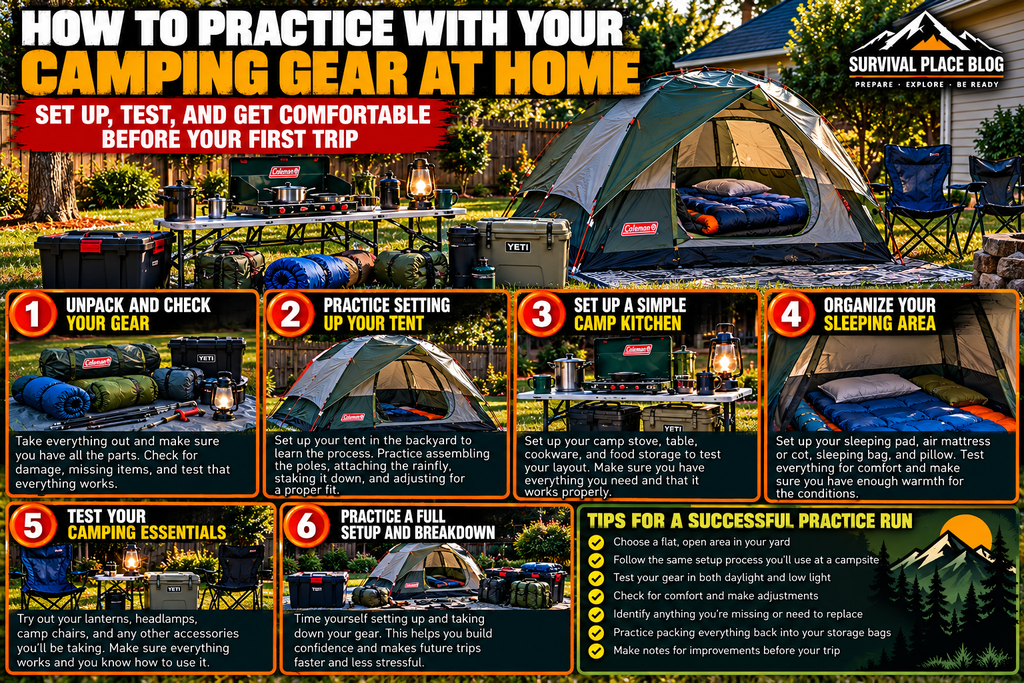
Practice pitching your new tent at home before taking it to a campground. A backyard, driveway, or suitable open area gives you room to identify each pole, clip, stake, and guyline. You can also check whether any parts are missing or damaged.
Follow the manufacturer’s instructions because pole arrangements and attachment points differ between models. Lay out the tent body, assemble the poles, attach the frame, fit the rainfly, and secure the tent as directed. Do not force a pole into a sleeve or bend a component beyond its intended shape.
How To Choose A Tent For Camping For Beginners?
How To Choose A Tent For Camping For Beginners
Source: wellness.alibaba.com
Read the instructions
Learn the correct order of assembly and identify all the supplied parts before starting.
Choose suitable ground
Practice on a flat area without sharp objects that could damage the floor.
Secure the tent
Learn how to use the stakes and guylines supplied or recommended by the manufacturer.
Test the doors
Open and close each entrance and check that the zippers move without catching the fabric.
Pack it again
Practice folding or rolling the shelter and fitting it into the storage bag.
Know When Your Tent Is Properly Set Up
A correctly pitched tent should have an even, stable frame, properly attached fabric, and a rainfly positioned according to the instructions. The doors should work smoothly, and the guylines should be secured where required. Loose fabric, twisted poles, and poorly placed stakes are signs that you should check the setup again.
If the tent does not fit together as shown in the instructions, stop and identify the problem. Never force a frame into position. Contact the manufacturer if a part appears defective or the instructions are unclear.
Check every connection
Make sure pole ends, clips, sleeves, and rainfly attachments are in their correct positions.
Inspect the anchoring
Confirm that stakes and guylines are secure and that the shelter is stable for the conditions.
12. Avoid These Common Beginner Tent Buying Mistakes
Many first-time buyers focus on appearance or advertised capacity and overlook the details that affect comfort and protection. A little research before purchasing can prevent problems during your first night outdoors.
Compare the complete design and intended use of each shelter. Do not assume that a higher price, larger number, or more technical description automatically means a better choice for your trip.
How To Choose A Tent For Camping For Beginners
Source: www.pinterest.com
Buying a tent that is too small
A tent may technically fit the advertised number of people but leave little space for sleeping pads or personal equipment. Compare actual dimensions.
Ignoring the weather
A tent suited to a warm, calm campground may not be appropriate for an exposed site with strong winds or heavy rain.
Choosing weight without considering use
An ultralight tent may be unnecessary for car camping, while a heavy family shelter may be unsuitable for backpacking.
Assuming every tent is waterproof
Check the rainfly, seams, floor, and entrances. Water protection depends on the complete construction and correct setup.
Forgetting ventilation
Limited airflow can increase condensation and make a tent uncomfortable in humid weather.
Skipping setup practice
Learning the frame and anchoring system at home can prevent delays and setup errors at the campsite.
Buying unnecessary accessories
Purchase compatible accessories that solve a real need instead of spending money on items that do not improve your planned trips.
What If You Already Bought the Wrong Tent?
First, identify the problem. If the tent is too small, check whether a different sleeping arrangement or an outdoor storage area can help. If it is difficult to pitch, review the instructions and practice before deciding whether the design is unsuitable.
If the shelter has a structural defect, damaged waterproof coating, or incompatible components, contact the seller or manufacturer. Do not attempt an unsafe repair or take a damaged tent into severe weather. If you can still return or exchange it, compare the replacement against your actual camping needs.
How To Choose A Tent For Camping For Beginners?
For a size problem
Measure your sleeping equipment and compare it with a larger model before your next trip.
For a setup problem
Review the manufacturer’s assembly guide and identify the exact step causing difficulty.
For a protection problem
Check whether the issue is a setup error, an open vent, a damaged seam, or a defective component.
13. Choose and Use Your Tent Safely
A suitable tent is only one part of a safe camping setup. Check the local weather, campground rules, terrain, and available facilities before departure. Follow official park guidance and carry the supplies needed for the conditions.
Choose a level site that is not in a low area where water can collect. Avoid dead or unstable trees and branches overhead, exposed ridges during dangerous weather, and places that could flood. Keep the sleeping area away from campfires and cooking equipment.
How To Choose A Tent For Camping For Beginners
Source: campingsaga.com
Check the forecast
Review expected rain, wind, temperatures, and severe weather alerts before leaving and while camping.
Avoid hazardous locations
Do not pitch under dead branches, in drainage channels, or in locations exposed to dangerous flooding or lightning.
Use proper anchoring
Secure the tent according to the manufacturer’s instructions and the conditions at the campsite.
Keep flames away
Never use a camp stove, lantern with an open flame, or fire inside a tent. Keep the shelter away from sparks and cooking areas.
Follow wildlife rules
Store food and scented items according to local park regulations. Use designated bear-resistant storage where required.
Do Not Treat a Camping Tent as an Emergency Shelter for Every Condition
Ordinary recreational tents have limits. They should not be assumed to protect campers from severe storms, dangerous lightning, extreme winds, or heavy snow. Follow weather warnings and move to a suitable building or designated safe location when conditions become dangerous.
Never use fuel-burning equipment inside a tent. Stoves, heaters, and lanterns that burn fuel can create a carbon monoxide risk and may cause fires. Use cooking equipment only in the outdoor locations and conditions permitted by its manufacturer and campground rules.
How To Choose A Tent For Camping For Beginners?
Know when to leave
If severe weather threatens your campsite, follow local emergency instructions and move to an appropriate safe location.
Protect the shelter
Avoid exposing a recreational tent to conditions beyond its stated design limits.
Frequently Asked Questions on How To Choose A Tent For Camping For Beginners
Q
What Type of Tent Is Best for a Beginner?
A simple three-season dome tent is a practical starting point for many beginners. It can provide a useful balance of weather protection, ventilation, and manageable setup for ordinary recreational camping. Choose the capacity and weight according to your group size and camping style.
Q
Should I Buy a Two-Person or Three-Person Tent?
If two adults want extra room for sleeping pads and personal items, a three-person tent may be more comfortable. A two-person model can work when both campers are comfortable with a compact sleeping area. Compare the actual floor dimensions before deciding.
Q
Is a Three-Season Tent Good for Summer Camping?
Yes. Many three-season tents are suitable for summer camping because they use mesh panels and rainflies to balance airflow, insect protection, and rain coverage. For very hot or humid locations, check the ventilation design and the amount of mesh.
Q
Do Beginners Need an Expensive Camping Tent?
No. Beginners do not necessarily need a premium tent. A reasonably constructed shelter with suitable capacity, reliable rain protection, good ventilation, and simple setup can meet the needs of many recreational campers. Spend more only when a specific feature provides a clear benefit.
Q
Is a Freestanding Tent Better for Beginners?
A freestanding tent can be easier to position and move during setup because its pole structure supports the main shape without requiring every corner to be staked first. However, it still needs proper stakes and guylines for stability. Some non-freestanding tents are also simple to use once you learn their setup system.
Q
How Can I Tell Whether a Camping Tent Is Waterproof?
Check the manufacturer’s waterproof specifications, rainfly coverage, floor construction, and seam sealing. A hydrostatic head rating can help you compare fabric resistance to water pressure, but it does not guarantee that the complete tent will remain dry. Proper pitching and maintenance also matter.
Q
Do I Need a Footprint for My Camping Tent?
A compatible footprint can help protect the tent floor from abrasion and sharp debris. It is useful when the manufacturer recommends one, but it should fit within the tent’s floor outline. An oversized groundsheet can collect rainwater underneath the shelter.
Q
How Many Doors Should a Beginner Camping Tent Have?
One door is often enough for a solo camper. Two doors can be more convenient for couples or friends sharing a smaller tent because each person can enter and exit without climbing over the other. Choose based on the number of occupants and the tent layout.
✦ Wrapping Up
Conclusion
Choosing a camping tent for beginners becomes easier when you start with your real needs. Decide where you plan to camp, how many people will sleep inside, and whether you will carry the shelter or transport it by car. Then compare capacity, season rating, weight, materials, rain protection, ventilation, and setup design.
For many first-time campers in the United States, a roomy three-season tent with a reliable rainfly, good airflow, and a straightforward pole system is a sensible place to start. Check its actual dimensions, review the manufacturer’s instructions, and practice pitching it before your first trip. A well-matched shelter can make your camping experience more comfortable without requiring an expensive or complicated setup.
💡 Key Takeaway
Before purchasing, shortlist three tents and compare their floor dimensions, sleeping capacity, season rating, complete weight, rainfly coverage, ventilation, setup requirements, warranty, and included accessories. Choose the one that best matches your actual camping plans, then practice setting it up at home.
Learn how to choose a waterproof tent for outdoor adventures with key features, fabric ratings, and size tips—plus top picks to keep you dry and comfy.
Wondering what is the best inflatable tent for camping? Get expert picks, key features, and tips to choose fast-pitch, durable, family-ready air tents.
Learn How To Clean Mold From A Tent Trailer with safe supplies, step-by-step tips, and prevention hacks. Restore your camper fast and avoid costly damage.