Carry a tent on a motorcycle by packing it into a compact waterproof bag and securing it to a suitable luggage rack, rear seat, or pannier system with strong motorcycle tie-down straps. Keep the load low, balanced, and away from hot or moving parts.
How To Carry A Tent On A Motorcycle?
Planning a motorcycle campingtrip across the United States requires more than choosing a good route and finding a place to sleep. Whether you are riding through the Rocky Mountains, exploring the Pacific Coast Highway, or visiting campgrounds in national forests, you need a safe way to carry your camping gear. A tent is often one of the largest items in your luggage, but it does not have to take up too much space.
The best way to transport a tent is to separate its main parts, pack them tightly, and secure them in a suitable motorcycle luggage system. You can carry the tent body in a waterproof duffel, place the poles in a separate protective sleeve, and attach both to approved luggage mounting points. The final setup must stay within your motorcycle’s weight limits and allow full steering, suspension movement, and access to the controls.
This guide explains how to prepare your tent, choose the right carrying position, use suitable straps, protect your gear from rain, and check the complete setup before riding. It also covers common packing problems and practical alternatives for riders who do not have a large luggage rack.
How To Carry A Tent On A Motorcycle
Source: easytripguides.com
Why Proper Tent Packing Matters on a Motorcycle?
A motorcycle has less room for luggage than a car or truck. Every item must fit within a limited space without affecting the rider’s control. A tent can be awkward to carry because its fabric, poles, stakes, and rainfly have different shapes and sizes.
An incorrectly packed tent can move during a ride, block a rear light, interfere with the rider, or come into contact with a moving part. A loose strap may also catch in the rear wheel or chain. These problems can turn a simple camping trip into a serious road hazard.
Weight placement matters just as much as strap strength. Motorcycle safety guidance recommends keeping cargo low, centered, and balanced. Heavy items placed far behind the rear axle can affect steering and braking, while uneven side loads may make the motorcycle pull to one side.
The goal is not simply to make the tent fit. The goal is to create a compact load that remains stable during normal riding, braking, cornering, and travel over rough roads.
How To Carry A Tent On A Motorcycle
Source: blessthisstuff.com
How To Carry A Tent On A Motorcycle?
Better motorcycle balance
A low and centered tent load helps prevent unnecessary changes to the motorcycle’s center of gravity.
Less movement during travel
Proper straps and mounting points help prevent the tent from sliding or bouncing over road bumps.
Protection from weather
Waterproof storage keeps the tent and nearby camping equipment protected during rain.
Improved access to other gear
A well-organized luggage system makes it easier to reach tools, food, rain gear, and personal items.
How To Carry A Tent On A Motorcycle?
Understand Your Motorcycle’s Weight Limits
Before loading a tent, check the motorcycle owner’s manual for its maximum permitted weight. The total load may include the rider, passenger, luggage, accessories, fuel, and other specified items. Do not assume that a strong-looking rear rack can support any amount of camping equipment.
Check the separate weight limits for the luggage rack, panniers, tail bag, and mounting hardware. A luggage accessory may have a lower limit than the motorcycle itself. The lowest applicable limit determines what you can safely carry in that position.
Check the owner’s manual
Find the motorcycle’s maximum load and any instructions for tire pressure or suspension adjustment.
Check accessory ratings
Confirm the permitted load for each rack, case, and luggage mounting system.
What Do You Need to Carry a Tent on a Motorcycle?
The right packing equipment makes carrying a tent much easier. You do not need an expensive luggage setup for every motorcycle, but you do need suitable storage and reliable attachment points. Choose equipment that matches the motorcycle, the tent’s packed dimensions, and the length of your trip.
Before buying anything, measure the packed tent. Include the poles and stakes if you plan to carry them together. Compare these measurements with the available space on your motorcycle and the dimensions of your luggage opening.
A compact tent is often easier to transport than a large family camping tent. However, the best option depends on the number of people, expected weather, and available storage. A tent that fits inside a pannier may be easier to manage than one that requires a large rear load.
A properly rated rack provides a stable mounting area for suitable lightweight camping gear.
Panniers or saddlebags
Side luggage can provide protected storage and help distribute equipment across the motorcycle.
Tie-down straps
Motorcycle-rated webbing straps or suitable adjustable luggage straps help hold the packed tent in place.
Protective pole sleeve
A separate sleeve protects tent poles and keeps their sharp ends away from the fabric.
Small accessory bags
Separate bags help organize tent stakes, repair items, and other small camping supplies.
How To Carry A Tent On A Motorcycle?
Choose the Right Straps
Use straps designed for luggage and suitable for the mounting points on your motorcycle. Adjustable webbing straps can provide a firm hold without relying on knots. Some motorcycle luggage systems also use dedicated mounting straps or compression buckles.
A cargo net can help hold a compact bag in place, but it should not be the only attachment for a bulky or heavy load unless its design and rating support that use. Avoid damaged straps, weak hooks, and loose elastic cords that can move or catch on the motorcycle.
Inspect the strap material
Look for cuts, worn stitching, damaged buckles, and signs of stretching.
Use multiple secure attachment points
Follow the luggage manufacturer’s mounting instructions and prevent the bag from shifting in any direction.
Keep loose ends controlled
Tuck away extra strap material so it cannot reach the chain, wheels, or suspension.
How to Pack a Tent Before Attaching It to Your Motorcycle?
Packing the tent correctly is the first step toward a stable motorcycle load. Instead of placing every component into one oversized bundle, separate the parts when this creates a smaller and easier-to-secure arrangement. Keep the fabric protected and make sure the poles cannot puncture the storage bag.
Start by cleaning and drying the tent whenever conditions allow. Dirt and moisture can damage fabric during long-term storage. If the tent is wet because of rain or morning dew, pack it separately from dry clothing and sleeping equipment.
Use the manufacturer’s recommended folding or storage method when available. Some tent fabrics and pole systems have specific care requirements. Avoid forcing a bulky tent into a small bag because excessive pressure can damage zippers, seams, or other components.
How To Carry A Tent On A Motorcycle
Source: odditymall.com
How To Carry A Tent On A Motorcycle?
Tent body
Fold or roll the main tent fabric into a compact shape and place it inside a protective storage bag.
Rainfly
Keep the rainflywith the tent or in a separate waterproof bag if it is wet.
Tent poles
Store the poles in their sleeve and protect their ends from sharp contact with other luggage.
Tent stakes
Place stakes in a closed pouch so their points cannot damage the tent or other belongings.
How To Carry A Tent On A Motorcycle?
Step 1: Clean and Dry the Tent
Remove loose dirt, grass, leaves, and small stones from the tent. Shake out the fabric and allow it to dry before packing it for extended storage. If the weather prevents complete drying, keep the wet parts in a separate waterproof bag and dry them at your next suitable stop.
Do not leave wet tent fabric pressed against dry sleeping bagsor clothing. Moisture can spread through luggage and create unpleasant odors or mildew if the equipment remains damp.
Check the corners
Remove dirt and small debris from the floor and tent corners.
Inspect the fabric
Look for tears, damaged seams, and loose parts before packing.
Step 2: Separate the Poles and Stakes
Remove the tent poles and fold them according to the manufacturer’s instructions. Put them inside their original sleeve or another protective cover. Do the same with the stakes and keep their sharp ends enclosed.
Separating these parts can help you use narrow spaces beside panniers or luggage bags. However, do not place long poles where they extend beyond the motorcycle in a way that could strike another vehicle or interfere with the rider.
Measure the pole length
Make sure the pole bundle fits within the intended storage area without creating an unsafe projection.
Protect delicate parts
Use a sleeve or padding to prevent the poles from rubbing against the tent fabric.
Step 3: Compress the Tent Carefully
Place the tent body inside a suitable stuff sack or waterproof dry bag. Remove excess air if the bag is designed for compression, but do not force the fabric into an excessively small space.
A compression bag can reduce the space needed for soft camping gear. However, it does not make a tent lighter. Always consider the actual weight and the luggage system’s limits.
Use a suitable bag
Choose a bag with enough capacity to close without stressing its seams or zipper.
Keep wet gear separate
Use a dedicated waterproof bag for wet tent fabric.
Where to Put a Tent on a Motorcycle?
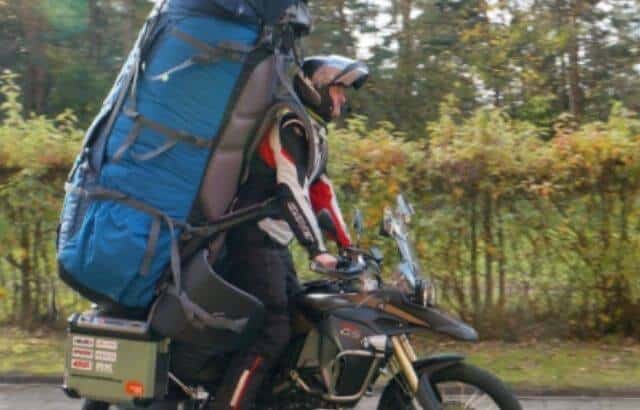
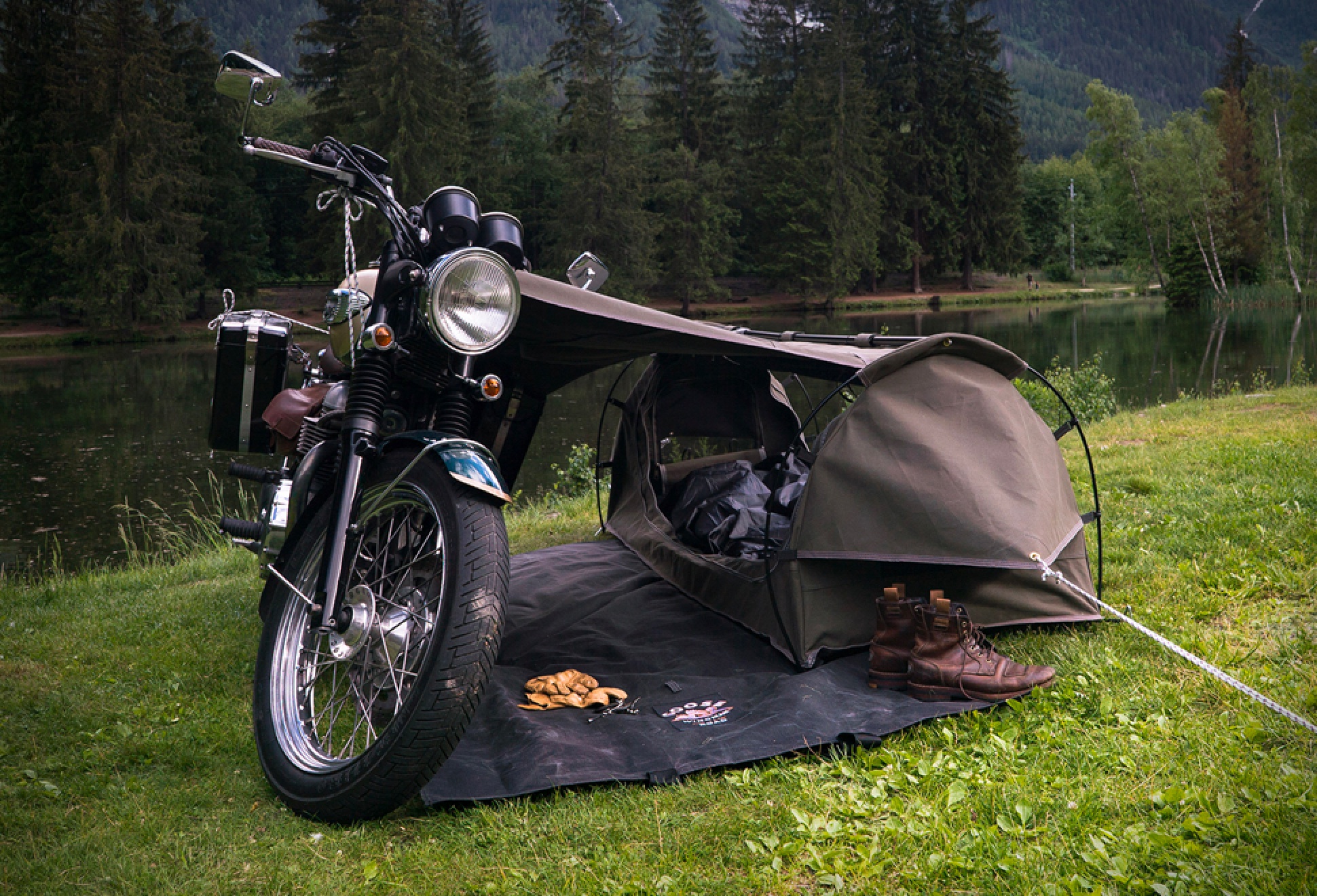
The best place to carry a tent depends on your motorcycle’s design and available luggage equipment. In most cases, a suitable rear luggage rack, rear seat luggage system, or pannier setup provides a practical solution. The tent should sit securely without blocking lights, interfering with the rider, or extending into moving parts.
Avoid choosing a position only because it offers the most storage space. A high or far-back load can change how the motorcycle handles. A bulky bag may also catch more wind, especially at highway speeds or in strong crosswinds.
Before selecting a location, check the mounting instructions and confirm that the luggage system is approved for your motorcycle. Never assume that a convenient frame tube, passenger grab rail, or body panel is a suitable cargo attachment point.
How To Carry A Tent On A Motorcycle
Source: easytripguides.com
How To Carry A Tent On A Motorcycle?
Option 1: Carry the Tent on a Rear Luggage Rack
A rear luggage rack is a common place to carry a compact tent. It offers a defined mounting area and can keep camping equipment away from the rider’s body. A waterproof duffel can be placed on the rack when its dimensions and weight are within the rack’s approved limits.
Keep the tent as low and forward as the luggage system allows. Avoid creating a tall stack behind the rear axle. Use the intended mounting points and make sure the load cannot slide backward or sideways.
Best for
Riders with a compatible rear rack and a compact tent bag.
Main advantage
Provides a convenient space for bulky but relatively lightweight camping equipment.
Main limitation
The rack has a specific weight rating and may not support a large or heavy tent load.
A suitable tail bag or rear seat luggage system can carry a tent when the motorcycle does not have a large luggage rack. The bag may attach through dedicated straps or a compatible mounting harness. Follow the manufacturer’s instructions rather than improvising attachment points.
Make sure the bag does not push the rider too far forward or restrict normal movement. The rider should be able to sit comfortably, reach the controls, and move naturally when leaning through turns.
Best for
Motorcycles with limited rack space but a compatible rear-seat luggage arrangement.
Main advantage
Can provide flexible storage without requiring a large hard case.
Main limitation
The attachment system must be suitable for the seat and motorcycle design.
How To Carry A Tent On A Motorcycle?
Option 3: Store the Tent in Saddlebags or Panniers
Panniers and saddlebags can be useful when the tent’s packed size allows it to fit inside. Hard panniers offer a firm outer shell, while soft saddlebags can provide flexible storage. Both options can keep the tent protected from road spray when properly closed.
Distribute the weight across both sides when using two panniers. Do not fill one side with heavy equipment while leaving the other nearly empty. Also check clearance from the exhaust, rear wheel, chain, and suspension.
Best for
Touring motorcycles and adventure motorcycles with suitable side luggage.
Main advantage
Keeps the tent within a more compact luggage profile.
Main limitation
The tent may not fit through the pannier opening, even if the case appears large enough.
How To Carry A Tent On A Motorcycle?
Option 4: Use a Tank Bag for Small Tent Components
A tank bag is generally better for small and lightweight equipment than for a complete tent. Depending on its size, it may hold a small pole accessory, repair kit, or other compact camping item. Keep heavy or sharp components away from the tank bag unless the manufacturer specifically allows them.
Check that the bag does not interfere with full handlebar movement, steering, instruments, or access to controls. Never attach a large tent bundle to the handlebars or front forks.
Best for
Small, frequently accessed camping accessories.
Main advantage
Provides convenient access to lightweight items.
Main limitation
Usually does not provide enough space for a complete tent.
How to Secure a Tent to a Motorcycle Step by Step?
Once the tent is packed and the correct luggage position is selected, secure it before loading the rest of your equipment. A good setup should hold the bag firmly without crushing it or placing pressure on fragile components.
The exact attachment method depends on the rack, bag, and strap system. Use the designated mounting points and follow the manufacturer’s instructions. Never attach a strap to a brake line, electrical cable, exhaust component, or other part that is not designed to support luggage.
How To Carry A Tent On A Motorcycle
Source: blessthisstuff.com
How To Carry A Tent On A Motorcycle?
Step 1: Position the Motorcycle Safely
Park on firm, level ground and switch off the engine. Use the center stand when available and suitable for the motorcycle and loading task. If the motorcycle only has a side stand, make sure it is stable and do not overload it while loading.
Prepare the tent bag and straps before lifting the luggage. This reduces the need to hold a bulky bag while searching for attachment points.
Check stability
Make sure the motorcycle cannot easily tip while you arrange the luggage.
Prepare the equipment
Inspect the straps, buckles, bag, and mounting points.
Step 2: Place the Tent in the Correct Position
Place the packed tent on the approved rack or luggage platform. Keep it low, centered, and as close to the motorcycle’s center as the mounting arrangement permits. Avoid placing heavy items far behind the rear axle.
Check the tent bag from the side and rear. It should not obstruct the license plate, brake light, turn signals, or the rider’s view. Make sure it does not prevent access to the passenger footrests if they are needed.
Keep it centered
Position the bag so it does not create an unnecessary side-to-side imbalance.
Check the riding position
Make sure the bag does not press against your back or interfere with normal movement.
How To Carry A Tent On A Motorcycle?
Step 3: Attach the Main Tie-Down Straps
Route the straps through the designated luggage attachment points and across the tent bag according to the mounting system instructions. Use enough properly positioned attachment points to prevent movement in every direction.
Tighten the straps gradually. The bag should remain firmly in place, but excessive pressure can damage its fabric, buckles, or contents. If the bag has a structured base, make sure the straps hold it against the support surface rather than pulling it into an awkward shape.
Use suitable webbing straps
Choose straps with secure buckles and a suitable load rating.
Avoid weak mounting points
Only attach straps to approved luggage mounts or suitable structural attachment points.
Remove excess strap length
Secure loose ends so they cannot flap in the wind or reach moving parts.
How To Carry A Tent On A Motorcycle?
Step 4: Check the Exhaust and Moving Parts
Inspect the complete setup for contact with the exhaust, engine, chain, sprockets, rear wheel, suspension, and other moving parts. Hot exhaust components can melt tent fabric and luggage straps. Moving parts can catch loose material and create a dangerous situation.
Check the motorcycle’s suspension travel and the luggage manufacturer’s required clearances. Do not assume that a bag is safe simply because it does not touch the wheel while the motorcycle is parked.
Exhaust clearance
Keep the tent, straps, and bag away from hot exhaust surfaces.
Wheel and chain clearance
Make sure no luggage or strap can enter the wheel or chain area.
Suspension clearance
Allow the suspension to move as designed without contacting the luggage.
How To Carry A Tent On A Motorcycle?
Step 5: Perform a Final Security Check
Push the packed tent gently in different directions to check for movement. Inspect each strap and buckle, then check the motorcycle from the front, rear, and sides. Confirm that the load remains within the approved weight limits.
Turn the handlebars fully in both directions while the motorcycle is stationary. Confirm that nothing interferes with steering or controls. Check the lights and mirrors, then take a short, cautious test ride in a safe area if the setup is ready.
Check all attachment points
Look for loose buckles, slipping straps, and unstable mounting connections.
Check visibility
Confirm that the lights, reflectors, and license plate remain visible.
Check after riding
Stop safely and inspect the luggage again before continuing.
How to Balance Motorcycle Weight When Carrying a Tent?
Correct weight distribution is one of the most important parts of motorcycle camping. A motorcycle reacts to added weight, and the effect depends on where that weight is placed. A tent may be relatively light, but combining it with a sleeping bag, cooking equipment, water, and tools can create a substantial load.
Keep heavy items low and near the motorcycle’s center. Use the side luggage system for suitable items and balance the left and right sides. A rear rack is often more suitable for lightweight, bulky equipment than dense objects.
The Motorcycle Safety Foundation advises riders to secure cargo, avoid interference with steering, and keep loads within the motorcycle’s gross vehicle weight rating. Its guidance also warns against placing heavy cargo too far behind the rear axle.
How To Carry A Tent On A Motorcycle
Source: easytripguides.com
Keep dense equipment low
Place suitable heavy items in low-mounted luggage rather than stacking them high.
Balance both sides
Distribute the weight evenly between left and right panniers when possible.
Keep the rear load light
Avoid concentrating heavy equipment at the far rear of the motorcycle.
Check tire pressure
Follow the motorcycle manufacturer’s instructions for tire pressure when carrying the additional load.
Example of a Practical Tent Packing Arrangement
Consider a rider planning a weekend camping trip on an adventure motorcycle with two compatible panniers and a rear luggage rack. The rider could place dense cooking equipment and tools in suitable low-mounted storage, distribute clothing and other equipment between the panniers, and carry a lightweight tent bag on the approved rear luggage platform.
This is only an example, not a universal loading plan. The actual arrangement must follow the motorcycle’s payload limit and each accessory’s weight rating. A smaller motorcycle or a different luggage system may require a completely different setup.
Left pannier
Suitable cooking equipment and other dense camping items, within the pannier’s rating.
Right pannier
Clothing, personal items, and other equipment arranged to balance the opposite side.
Rear rack
A compact tent and other lightweight bulky equipment, within the rack’s limit.
Tank bag
Small items that need frequent access, provided the bag does not affect steering.
How Extra Weight Changes Motorcycle Handling?
Additional cargo can affect acceleration, braking, cornering, and low-speed balance. A motorcycle that feels normal when unloaded may respond differently with a fully packed camping setup. This is why a test ride is useful before leaving for a long trip.
If the front feels unusually light, the rear suspension seems overloaded, or the motorcycle becomes difficult to control, stop in a safe place. Recheck the load and consult the owner’s manual. Do not try to solve a serious handling problem by simply tightening the straps.
Unusual steering
Check for excessive rear loading, incorrect weight distribution, and interference with the steering system.
Unstable luggage
Stop and correct any bag movement before riding again.
Suspension problems
Check the manufacturer’s load and suspension guidance instead of guessing at adjustments.
How to Protect a Tent From Rain, Dust, and Road Debris?
A motorcycle tent travels in the open air, so it needs more protection than luggage stored inside a car. Rain, road spray, dust, mud, and wind can reach an exposed tent bag. A waterproof outer bag or properly fitted luggage cover helps reduce this exposure.
A waterproof duffel is a practical option for many riders. Choose a bag with a suitable closure system and enough room for the packed tent. Check the manufacturer’s instructions for sealing the opening because a waterproof material does not guarantee that every closure is waterproof.
Keep the sleeping bag and dry clothing in separate waterproof storage. This is especially useful on multi-day trips because a wet tent may need to travel with the motorcycle before it can be dried properly.
How To Carry A Tent On A Motorcycle
Source: odditymall.com
How To Carry A Tent On A Motorcycle?
Use a Waterproof Dry Bag
Place the tent inside a suitable dry bag before attaching it to the motorcycle. Close the bag according to its instructions and inspect the closure before riding. Avoid overfilling it because this may prevent a proper seal.
A dry bag can also help protect tent fabric from dust and road grime. However, check the bag during stops, especially after riding in heavy rain or through muddy areas.
Choose suitable material
Look for durable waterproof fabric designed for outdoor luggage use.
Protect the closure
Follow the correct rolling or fastening method to reduce water entry.
Keep Wet and Dry Camping Gear Separate
A wet tent should not share an unprotected storage space with dry clothing, bedding, or electronics. Use a separate wet-gear bag so moisture does not spread to other equipment.
When you reach the campsite, remove the tent and allow it to dry when conditions permit. Clean and dry the tent before storing it for a longer period after your trip.
Separate wet fabric
Keep the rainfly and wet tent body away from dry sleeping equipment.
Inspect after rain
Check the bag and its closure for water entry.
Dry before long-term storage
Avoid storing damp tent fabric for extended periods.
Common Mistakes to Avoid When Carrying a Tent
Many motorcycle luggage problems begin with small packing mistakes. A bag may look secure in the driveway but shift when exposed to wind, road vibration, and repeated bumps. A careful inspection before and during the trip can prevent many of these problems.
How To Carry A Tent On A Motorcycle?
Do not assume that a strong strap makes an unsafe mounting position acceptable. The motorcycle’s weight limits, luggage ratings, and approved mounting points still apply. If the tent cannot be carried without blocking lights, interfering with moving parts, or creating an unstable load, change the arrangement.
How To Carry A Tent On A Motorcycle
Source: blessthisstuff.com
Using only one weak strap
A single attachment may allow the bag to rotate or slide. Use a suitable mounting system with enough secure attachment points.
Packing too much gear
A large load can exceed the motorcycle’s payload or accessory limits. Remove unnecessary items before departure.
Placing the tent too high
A high load can raise the center of gravity and affect balance. Keep the luggage low when the approved mounting arrangement allows it.
Ignoring exhaust heat
Tent fabric and synthetic straps can be damaged by hot exhaust components. Maintain the required clearance.
Leaving straps loose
Loose ends can flap, wear against other parts, or become caught in moving components.
Ignoring side-to-side balance
Uneven pannier loads can affect motorcycle stability. Distribute the cargo carefully.
Riding without a test load
A long trip is not the right time to discover that the tent moves or affects steering. Test the complete setup first.
How To Carry A Tent On A Motorcycle?
What to Do if the Tent Keeps Moving?
If the tent shifts during a test ride, stop in a safe location and inspect the mounting system. Check whether the bag is too large for the platform, whether the straps are correctly positioned, and whether the mounting points are suitable.
Reposition the bag and use a compatible luggage support or mounting harness if needed. If the tent still moves, use a different storage position or a smaller bag. Never continue riding with an unstable load.
Check the bag shape
A rounded or oversized bag may need a more suitable support base.
Inspect the attachment points
Replace damaged mounting hardware and follow the luggage manufacturer’s instructions.
Repeat the test
Check the revised setup in a safe area before returning to normal travel.
What to Do if the Tent Does Not Fit?
Do not force a tent into a luggage space that is too small. Excessive pressure can damage the fabric, poles, or bag closure. Try separating the poles and stakes from the tent body and storing each part in a suitable location.
If the complete tent still does not fit, consider a compact tent designed for backpacking or motorcycle camping. Another option is a compatible larger luggage system, provided its weight and mounting limits are suitable for the motorcycle.
Repack the components
Separate the tent body, poles, and stakes to make better use of available space.
Choose smaller equipment
Consider a tent with a smaller packed size and a practical pole length.
How to Test Your Motorcycle Tent Setup Before a Long Trip?
A complete test load helps you identify problems before you reach the highway. Pack the motorcycle exactly as you plan to travel, including the tent, sleeping bag, clothing, food, water, and tools. Check the combined weight and every luggage limit before starting the test.
Begin with a stationary inspection. Check steering movement, luggage clearance, lights, mirrors, strap tension, and the motorcycle’s suspension. Then ride slowly in a safe, open area where you can assess how the loaded motorcycle responds.
If everything feels stable, gradually test normal riding actions in a suitable area. Pay attention to low-speed balance, smooth braking, and cornering. Do not attempt aggressive maneuvers or high-speed tests to evaluate a new luggage arrangement.
After the test, stop and inspect the straps again. Look for movement, rubbing marks, damaged fabric, loose buckles, or changes in clearance. Correct any problem before beginning the actual trip.
How To Carry A Tent On A Motorcycle
Source: easytripguides.com
Before riding
Check total weight, accessory ratings, tire pressure, suspension guidance, lights, and luggage security.
During the test
Ride cautiously and check for unusual handling, noise, vibration, or luggage movement.
After the test
Inspect every strap and mounting point and correct any issues.
During the journey
Recheck the luggage at safe stops, especially after rough roads or heavy rain.
How To Carry A Tent On A Motorcycle?
Signs of a Properly Secured Tent
A properly secured tent stays in its intended position during the test ride. Its straps remain tight, its bag does not rub against the motorcycle, and no part of the load interferes with the rider or vehicle controls.
The motorcycle should also feel predictable for its load. If the handling changes sharply, the front feels unusually light, or the rear luggage moves, stop and investigate instead of accepting the setup.
Stable bag
The tent remains centered and does not slide or rotate.
Safe clearance
No luggage or strap contacts hot or moving parts.
Normal access
The rider can use the controls, mirrors, lights, and footrests as intended.
Secure fasteners
All straps, buckles, and mounting points remain in good condition.
How To Carry A Tent On A Motorcycle
Frequently Asked Questions About How To Carry A Tent On A Motorcycle
Q
Can I carry a tent on the back of my motorcycle?
Yes. You can carry a tent on the rear of your motorcycle if you use a suitable luggage rack or approved rear-seat luggage system. Keep the load within the accessory’s weight limit and position it as low and forward as practical. Secure it with suitable straps and make sure it does not block the rear lights, license plate, or rider.
Q
Can I carry a tent without a motorcycle luggage rack?
Yes, depending on your motorcycle’s design. A compatible rear-seat luggage system, tail bag, or suitable throw-over luggage may provide another option. Follow the mounting instructions and use approved attachment points. Never assume that an exposed frame part or passenger grab rail can support a luggage load.
Q
Should I carry tent poles separately from the tent?
Separating tent poles from the main tent body can make packing easier. Poles are long and relatively rigid, while the tent fabric is soft and compressible. Store poles in a protective sleeve and make sure they do not extend beyond the motorcycle in an unsafe way. Keep sharp stakes in a separate closed pouch.
Q
Are bungee cords safe for carrying a tent on a motorcycle?
Bungee cords may help hold suitable lightweight luggage in place, but they should not automatically be treated as the main attachment for every tent load. Their stretch can allow luggage to move, and exposed hooks can create additional hazards. Suitable webbing straps with secure mounting points are generally a more controlled option. Always follow the luggage manufacturer’s instructions.
Q
How do I keep my tent dry while riding in the rain?
Place the tent inside a suitable waterproof dry bag or waterproof luggage compartment. Close the bag according to the manufacturer’s instructions and check the closure before riding. Keep wet tent fabric separate from dry clothes and bedding. Inspect the luggage after heavy rain to make sure water has not entered.
Q
Can I carry a large camping tent on a small motorcycle?
It depends on the tent’s weight, packed size, motorcycle payload, and available luggage capacity. A large tent may be too bulky even when its weight is low. Measure the packed tent and compare it with the motorcycle’s luggage space and mounting limits. A compact backpacking tent is often easier to transport on a smaller motorcycle.
Q
Does carrying a tent affect motorcycle handling?
Yes. Any additional cargo can change motorcycle balance, steering, braking, and suspension behavior. The effect depends on the amount of weight and its position. Keep the load low, centered, and balanced, and follow the motorcycle manufacturer’s instructions for tire pressure and suspension settings. Test the fully loaded motorcycle before a long journey.
Q
How often should I check a tent strapped to my motorcycle?
Check the tent and its attachment points before every ride and during safe stops. Pay special attention after traveling over rough roads, hitting bumps, or riding in strong wind or heavy rain. Look for loose straps, damaged buckles, shifting luggage, and contact with hot or moving motorcycle parts.
✦ Wrapping Up
Conclusion
Carrying a tent on a motorcycle is straightforward when you choose the right storage method and secure the load correctly. A waterproof duffel, suitable luggage rack, panniers, and reliable tie-down straps can help you transport camping equipment without taking up unnecessary space.
The most important factors are weight, position, and security. Keep the tent low and centered, balance the luggage, stay within the motorcycle and accessory weight limits, and maintain safe clearance from the exhaust, wheels, chain, and suspension. Never ignore a load that shifts or changes how the motorcycle handles.
Before leaving for a motorcycle camping trip in the United States, pack your complete setup and test it in a safe area. Inspect the straps before departure and at regular stops. A few careful checks can make your journey more comfortable and help you reach your campsite with your tent and other equipment ready to use.
💡 Key Takeaway
Pack your tent in a waterproof bag, attach it to a suitable luggage system with secure straps, check the motorcycle’s weight limits, and complete a cautious test ride before starting your camping trip.
Learn the pros, cons, and best uses of dome, tunnel, A-frame, and geodesic tents. What Are The 4 Types Of Tents And Their Uses answered in a quick guide.