How much to rent a tent? Compare 2026 US rental prices by size, type, and event. Learn about delivery, setup, accessories, and hidden costs. Renting a tent in the United States typically costs $75 to $1,500 or more, depending on its size, style, rental period, and included services.
A small party tent may cost $150 to $350, while a large event or wedding tent can cost several thousand dollars. Delivery, installation, sidewalls, lighting, and flooring can increase the final bill.
Planning an outdoor party, wedding, graduation, or family gathering in the United States often means finding a reliable way to protect guests from sun and rain. Renting a tent is a practical option because you get temporary shelter without buying, storing, or maintaining a large structure. However, rental prices can vary widely between local companies and event locations.
The size of the tent is one of the biggest cost factors, but it is not the only one. A basic 20-by-20-foot tent may have a modest rental price, while a larger frame tent with professional installation, sidewalls, lighting, and flooring can require a much bigger budget. Some companies include setup and takedown, while others charge separately for delivery, equipment, or additional labor.
This guide explains how much it costs to rent different tent sizes in the US, what affects the final price, and how to estimate a realistic event budget.
It also covers wedding rentals, backyard parties, commercial events, and questions worth asking before signing a rental agreement. The price examples are based on publicly listed US rental prices reviewed on November 9, 2026. They are planning estimates, not guaranteed local quotes.
How Much To Rent A Tent?
How Much To Rent A Tent
Source: astyledwedding.com
How Much Does It Cost To Rent A Tent By Size?
Tent rental prices depend heavily on the amount of covered space you need. Small tents are suitable for food stations and intimate gatherings, while larger structures can shelter dining areas, dance floors, and hundreds of guests.
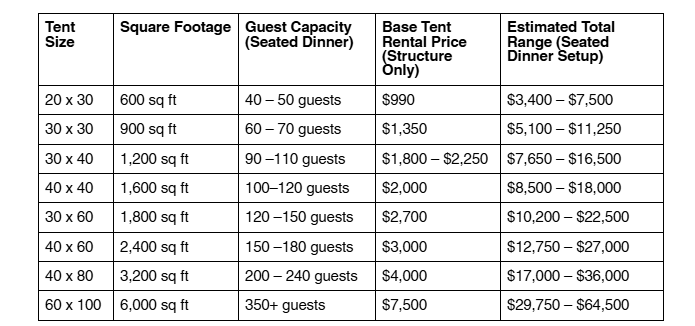
Published 2026 rental price lists from US companies show that a basic 20-by-20-foot pole tent can cost around $225 to $252. A similar frame tent may cost approximately $325 to $331. Larger sizes generally cost more because they require additional materials, transport, and installation work.
The following table provides practical budget ranges for common rental sizes. These are indicative planning estimates synthesized from available rental listings, not a fixed national price schedule. Actual prices depend on the company, location, tent style, and services included.
How Much To Rent A Tent?
How Much To Rent A Tent
Source: bigredbash.com.au
10 x 10 feet
Estimated rental budget: $75 to $200. Suitable for a small food station, vendor booth, or limited shade area.
15 x 15 feet
Estimated rental budget: $150 to $250. Useful for a small gathering or compact outdoor activity.
20 x 20 feet
Estimated rental budget: $225 to $400. A common choice for small backyard parties and family celebrations.
20 x 30 feet
Estimated rental budget: $325 to $500. Provides more room for dining tables, chairs, and a small buffet area.
20 x 40 feet
Estimated rental budget: $375 to $650. Suitable for medium-sized gatherings and larger dining arrangements.
30 x 30 feet
Estimated rental budget: $475 to $800. Offers additional space for guests, tables, and event activities.
30 x 60 feet
Estimated rental budget: $775 to $1,200 or more. Often used for larger parties, receptions, and community events.
40 x 60 feet
Estimated rental budget: $1,100 to $2,000 or more. Provides substantial covered space for large gatherings.
How Much Does A 20 x 20 Tent Cost to Rent?
A 20-by-20-foot tent typically costs around $225 to $400 to rent, depending on its construction and rental package. This size provides 400 square feet of covered space and may accommodate approximately 30 to 40 people in some seating arrangements.
For example, A-1 Party Rental lists a 20-by-20-foot pole tent at $252 and a frame tent at $330.75. These published prices demonstrate how the construction style can affect the rental price even when the covered area is the same.
A 20-by-20-foot tent works well for a small birthday party, family gathering, or outdoor food area. However, it may feel crowded if you need dining tables, a buffet, and space for guests to move around.
How Much To Rent A Tent?
Best use
Small parties, food stations, and compact outdoor gatherings.
Main limitation
Limited space for multiple seating arrangements and additional event equipment.
How Much Does A 20 x 40 Tent Cost To Rent?
A 20-by-40-foot tent commonly costs approximately $375 to $650 for a basic rental, although delivery and installation can increase the total. Its 800 square feet of coverage makes it useful for medium-sized events.
This size may accommodate around 50 to 70 people in some seating arrangements. Actual capacity depends on table size, chair spacing, buffet placement, and whether guests need room for dancing.
It is a useful middle option when a 20-by-20-foot tent is too small but a much larger structure would waste space and money.
How Much To Rent A Tent?
Best use
Graduation parties, family reunions, outdoor dinners, and medium-sized celebrations.
Main advantage
Provides more flexibility for separate dining and serving areas.
How Much Does It Cost To Rent A Tent For Different Events?
The type of event affects how much you should budget for a tent. A basic backyard gathering may need only a covered space, while a wedding or corporate function may require flooring, lighting, tables, chairs, and weather protection.
For this reason, the price of the tent itself should not be confused with the total event rental cost. A basic structure can be relatively affordable, but a fully equipped event space requires more equipment and labor.
The following estimates are useful starting points for planning. They are not fixed package prices, and local quotes may fall outside these ranges.
How Much To Rent A Tent?
How Much To Rent A Tent
Source: detroitchinatown.org
Backyard birthday party
Budget approximately $150 to $500 for a small or medium tent. Additional tables, chairs, and lighting may increase the total.
Graduation party
Budget approximately $300 to $900 for a medium-sized tent, depending on guest numbers and seating needs.
Family reunion
Budget approximately $400 to $1,200 for a larger tent that can provide space for dining and social activities.
Wedding reception
A basic wedding tent may cost approximately $500 to $2,800. More elaborate installations with flooring and climate control can cost several thousand dollars more.
Corporate event
Budget approximately $500 to $2,500 or more for a suitable structure, depending on the number of attendees and event requirements.
Community festival
Several tents or one large commercial structure may be required. Total costs depend on the number of covered areas and installation requirements.
How Much Does It Cost To Rent A Tent For A Wedding?
A wedding tent rental in the United States can cost approximately $500 to $2,800 for the basic structure. A commonly cited planning range for many standard wedding tent rentals is around $1,200 to $2,000, although the final amount depends on the size and style.
A small wedding with approximately 50 guests may need a 20-by-30-foot tent. A celebration with 100 guests may require around 1,500 square feet or more when dining arrangements are included. Larger weddings may need a 40-by-60-foot tent or a bigger structure.
The tent is only one part of a wedding setup. Flooring, decorative lighting, tables, chairs, linens, dance floors, and climate control can increase the overall budget. Couples should request a complete event estimate rather than relying on the advertised tent price.
Basic wedding tent
A simple structure without elaborate decorations or additional equipment.
Mid-range wedding setup
A larger tent with seating, basic lighting, and selected weather protection.
Premium wedding setup
May include sailcloth or clear-top construction, flooring, decorative lighting, climate control, and professional installation.
How Much Does It Cost To Rent A Tent For A Backyard Party?
A backyard party tent may cost around $150 to $600, depending on its size and rental terms. A small gathering may need only a 10-by-10-foot or 20-by-20-foot tent, while a larger family event may need a 20-by-30-foot structure.
Before booking, measure the usable area in your yard. Trees, fences, power lines, gardens, and nearby buildings can affect where the tent can be installed.
Also check whether the rental company provides installation. A lower-priced tent that requires self-assembly may not be the best option if you have limited time or experience.
How Much To Rent A Tent?
Small gathering
Choose a compact tent for a limited number of guests and a simple seating plan.
Large family party
Choose a larger structure with enough room for dining and movement.
What Factors Affect Tent Rental Prices?
Several factors determine the final amount you pay for a tent rental. Two customers can rent the same size tent and receive different quotes because their locations, surfaces, delivery distances, and service requirements are different.
Understanding these factors helps you compare rental offers fairly. It also makes it easier to identify which expenses are necessary and which ones are optional.
How Much To Rent A Tent
Source: rainorshinevt.com
Tent Size And Covered Area
Tent size is one of the main pricing factors. Larger tents require more fabric, support components, anchoring equipment, transportation space, and installation labor.
A 20-by-20-foot tent covers 400 square feet, while a 20-by-40-foot tent covers 800 square feet. The second tent provides twice the floor area, but its rental cost may not be exactly double because suppliers use different pricing structures.
How Much To Rent A Tent?
Smaller structures
Usually cost less and work for limited gatherings or individual event areas.
Larger structures
Require more equipment and may need a larger installation crew.
Tent Type And Construction
Different tent designs have different construction and installation requirements. A basic pole tent may cost less than a premium sailcloth structure, while a frame tent can be more suitable for certain hard surfaces.
A frame tent uses a supporting framework and does not have interior center poles. A pole tent uses poles and tensioned fabric, with stakes and support lines around its perimeter. A clear-top or sailcloth tent may have a higher rental price because of its materials, appearance, and installation needs.
Pole tent
Often an economical choice for suitable grass areas. It generally needs stakes and extra perimeter clearance.
Frame tent
Provides an open interior without center support poles. It may be installed on different surfaces with suitable anchoring.
Sailcloth tent
Offers a distinctive translucent appearance and is often selected for weddings and formal events.
Clear-top tent
Allows natural light into the covered area and may cost more than a standard tent.
Rental Location And Delivery Distance
Your location can have a noticeable effect on tent rental prices. Companies in major US cities may charge more because of labor costs, transportation, parking restrictions, and limited installation access.
Rural customers may also face higher costs if the rental company must travel a long distance. Some businesses include delivery within a small service area but charge extra for locations outside it.
Ask whether the quote includes delivery to your exact address, unloading, setup, and final pickup. Do not assume that a free delivery advertisement covers every service.
How Much To Rent A Tent?
Urban locations
May involve higher labor, parking, access, and permit-related expenses.
Suburban locations
May offer more installation space and convenient delivery access.
Rural locations
May require additional transportation charges because of longer travel distances.
Season And Event Date
Demand can influence rental availability and pricing. Spring and summer are busy periods for outdoor weddings, graduations, and family parties in many parts of the United States.
Popular Saturday dates may have fewer available tents than weekdays or less popular dates. Some rental companies also use seasonal pricing or minimum order requirements.
Request a quote early when planning a large event. Early booking gives you more time to compare options, confirm installation details, and arrange the necessary equipment.
Peak season
Popular dates may have limited availability and less flexibility.
Off-peak dates
May offer more rental choices and better opportunities to negotiate.
Weekend events
May have different pricing and rental periods from weekday events.
Rental Duration And Labor
Some tent companies charge by the day, while others offer a weekend or multi-day rental package. The length of time the tent stays at your property can affect the price.
A wedding tent may be installed before the event and removed afterward. Even if the celebration lasts only one day, the rental company may need to reserve the equipment for several days.
Labor is another factor. Difficult access, uneven ground, long carrying distances, and special anchoring requirements can increase installation time and cost.
How Much To Rent A Tent?
Single-day rental
May suit small parties with straightforward delivery and installation.
Weekend rental
Can provide more flexibility for setup, the event, and removal.
Extended rental
May require a separate multi-day rate or additional service charges.
What Additional Costs Should You Expect When Renting A Tent?
The advertised tent price may not include everything required for your event. Many rental companies charge separately for accessories, furniture, delivery, or specialized installation services.
These extra expenses can make a basic rental much more expensive. The best way to avoid surprises is to request an itemized estimate that lists every included and optional service.
How Much To Rent A Tent?
How Much To Rent A Tent
Source: storage.googleapis.com
Delivery and pickup
The company may charge for transportation, unloading, and collection after the event.
Installation and takedown
Professional setup may be included or listed as a separate labor expense.
Sidewalls
Solid or windowed panels can provide extra privacy and weather protection. They are often rented separately.
Tables and chairs
Furniture costs depend on the quantity, style, and rental duration.
Lighting
String lights, decorative fixtures, and additional electrical equipment may increase the bill.
Flooring
Temporary floors or dance floors may be needed for uneven ground or formal events.
Heating and cooling
Climate control may require additional equipment, fuel, electrical connections, and installation.
Permits and anchoring
Certain locations may require permits, special anchoring, or approval from the property owner.
How Much Do Tent Sidewalls Cost?
Tent sidewall prices vary by length, material, and style. Public rental price lists show examples such as $1.25 per foot for solid panels and $1.50 per foot for window panels. Other suppliers charge a fixed amount for each panel.
Sidewalls can help reduce wind exposure and provide additional privacy. However, they should not be treated as a guarantee against severe weather. The rental company should confirm which panels are suitable for the structure and expected conditions.
Solid sidewalls
Provide privacy and block some wind and outside views.
Window sidewalls
Allow natural light while providing a partial enclosure.
Clear sidewalls
Preserve visibility while helping enclose the event space.
How Much Do Tables And Chairs Cost?
Furniture costs depend on the style and quantity you need. Published rental examples include basic folding chairs for approximately $1.50 to $2.30 each and banquet tables for approximately $8 to $10.50 each.
For example, renting 50 basic chairs at $1.50 each would cost $75 before delivery, taxes, or other fees. Renting five tables at $10 each would add another $50.
Ask whether furniture delivery and placement are included. Some companies deliver tables and chairs but leave the setup to the customer.
How Much To Rent A Tent?
Folding chairs
A practical choice for casual gatherings and large parties.
Banquet tables
Useful for food service, dining, and registration areas.
Round tables
Often used for weddings and formal dining arrangements.
How Much Do Tent Lighting And Climate Control Cost?
Lighting and climate control can add high costs to an event tent. A simple string-light rental may be relatively inexpensive, while large lighting systems and professional electrical work can require a bigger budget.
Heating and air conditioning need careful planning. The correct equipment depends on tent size, enclosure, weather, electrical supply, and manufacturer requirements. Ask the rental company to determine suitable equipment rather than choosing a heater or cooling unit based only on price.
Fuel, generators, cables, and electrical distribution may also create separate expenses.
Basic string lights
Useful for simple evening gatherings and general visibility.
Decorative lighting
Can include chandeliers and other fixtures for formal events.
Heating equipment
May be needed during colder months, subject to safe installation and ventilation requirements.
Cooling equipment
May require a suitable generator or electrical connection and an appropriately enclosed structure.
How To Choose The Right Tent Size For Your Event
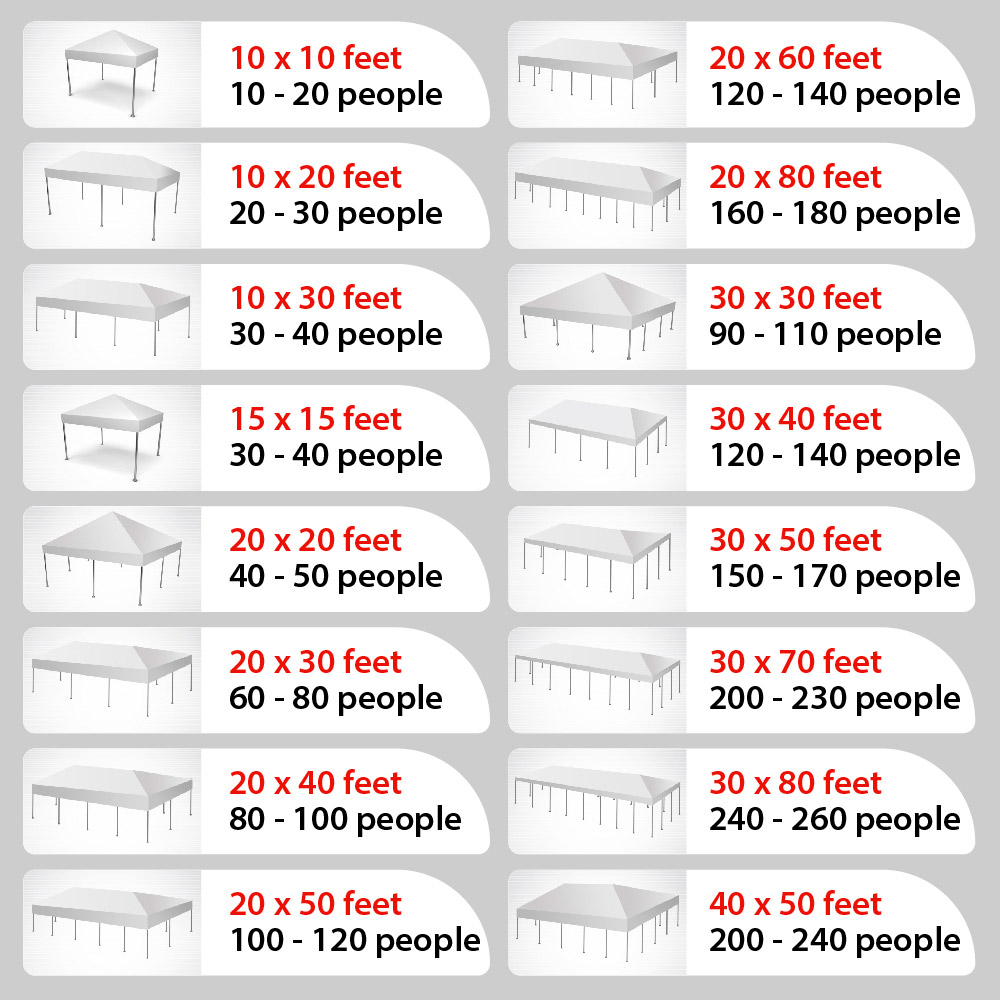
Choose a tent based on the number of guests and the activities taking place underneath it. A structure that fits 50 people standing may not provide enough space for 50 people seated at dining tables.
A useful planning estimate for seated dining is approximately 12 to 15 square feet per guest. This is a starting point, not a universal capacity rule. Dance floors, buffet stations, stages, bars, and vendor areas need additional space.
For example, 50 guests may need around 600 to 750 square feet for seated dining alone. A 20-by-30-foot tent provides only 600 square feet, so a larger structure may be more comfortable when extra equipment is needed.
How Much To Rent A Tent?
How Much To Rent A Tent
Source: elleeventrentals.com
Estimate Space Based On Guest Count
Start by listing the number of guests and the type of seating arrangement. Then identify any other areas that need to be covered.
The following estimates offer a simple starting point for seated dining. Actual requirements change with table shapes, chair spacing, and event layout.
20 guests
Approximately 240 to 300 square feet for basic seated dining.
50 guests
Approximately 600 to 750 square feet for seated dining.
75 guests
Approximately 900 to 1,125 square feet for seated dining.
100 guests
Approximately 1,200 to 1,500 square feet for seated dining.
150 guests
Approximately 1,800 to 2,250 square feet for seated dining.
200 guests
Approximately 2,400 to 3,000 square feet for seated dining.
Measure The Installation Area
The tent must fit within the available property area, not just the space occupied by guests. Some structures need extra room for stakes, support lines, and installation access.
Pole tents commonly need additional clearance beyond their stated dimensions. For example, a company may require a 30-by-30-foot area to install a 20-by-20-foot pole tent.
Check for trees, overhead wires, underground utilities, fences, and nearby structures. Never assume that a tent can be installed safely just because its fabric footprint fits the yard.
Measure the ground
Record the length and width of the available installation area.
Check overhead clearance
Look for branches, cables, roof edges, and other overhead obstacles.
Identify underground services
Ask about utility checks before allowing stakes to be driven into the ground.
Confirm the surface
Tell the rental company whether the tent will stand on grass, concrete, asphalt, or another surface.
Allow Space For Tables, Food, And Movement
A comfortable event layout needs more than enough floor space for chairs. Guests must be able to walk between tables, reach food stations, and move toward exits without crowding.
If your event includes dancing, entertainment, or a buffet, tell the rental company before selecting a size. Adding these features later can mean renting another tent or changing the original layout.
Ask for a basic floor plan when planning a large event. It can help reveal space problems before the equipment arrives.
How Much To Rent A Tent?
Dining area
Allow sufficient space for tables, chairs, and comfortable movement.
Food service
Keep buffet tables and catering equipment in a separate area where possible.
Dance floor
Include its full footprint when calculating the required tent area.
Entry and exits
Keep access routes clear and follow applicable fire and venue requirements.
Example: How Much Would A Complete Tent Rental Cost?
A sample budget makes it easier to understand the difference between the tent price and the full rental expense. Consider a hypothetical outdoor party with 50 guests using a 20-by-40-foot frame tent.
Assume the basic tent rental costs $499, based on a publicly listed example from a US rental company. The remaining figures below are illustrative planning amounts, not verified prices from that same company.
How Much To Rent A Tent
Source: www.youtube.com – Reventals
20-by-40-foot tent
Basic rental estimate: $499.
50 folding chairs
50 chairs at $1.50 each: $75.
Five banquet tables
Five tables at $10 each: $50.
Sidewalls
Illustrative allowance: $100.
Lighting
Illustrative allowance: $75.
Delivery and installation
Illustrative allowance: $150.
Calculate The Estimated Total
The example adds up as follows: $499 for the tent, $75 for chairs, $50 for tables, $100 for sidewalls, $75 for lighting, and $150 for delivery and installation.
The estimated total is $949 before applicable taxes, permits, additional labor, or other fees. The actual price could be lower if some services are included or higher if the property requires special anchoring.
This example demonstrates why comparing only the tent’s advertised price can lead to an inaccurate budget. A complete quote gives you a much clearer picture of the amount you will actually pay.
How Much To Rent A Tent?
Basic tent cost
$499.
Furniture cost
$125.
Sidewalls and lighting
$175.
Delivery and installation
$150.
Estimated total
$949 before taxes and any unlisted charges.
How To Compare Rental Quotes
Request quotes from at least three rental companies and give each business the same event details. This makes it easier to identify genuine price differences.
One company may advertise a lower base price but charge extra for setup and delivery. Another may offer a higher initial price that includes those services.
Compare the final amount, rental period, equipment quality, and service terms rather than choosing the cheapest advertised figure.
Confirm the tent dimensions
Make sure every quote covers the same size and general construction type.
Check included services
Compare delivery, setup, takedown, and pickup charges.
Review accessory prices
Compare sidewalls, furniture, flooring, and lighting separately.
Check payment terms
Review deposits, cancellation policies, damage charges, and refund conditions.
How To Save Money When Renting A Tent?
You can reduce tent rental expenses by choosing the right size, booking early, and avoiding unnecessary accessories. The goal should be to get enough covered space and suitable equipment without paying for features your event does not need.
However, saving money should never mean ignoring installation requirements or weather risks. A properly installed tent is more valuable than a cheaper structure that does not suit the location.
How Much To Rent A Tent?
How Much To Rent A Tent
Source: tampatentsandevents.com
Choose The Correct Tent Size
Avoid renting a tent that is much larger than your actual needs. Extra space can increase the rental price and may require additional anchoring and installation work.
At the same time, do not choose a tent that is too small for your guests. A crowded structure can create uncomfortable conditions and restrict access.
Prepare a guest list
Estimate attendance before asking for a quote.
Plan the layout
Include dining, food service, entertainment, and walking space.
Book Before Peak Demand
Contact rental companies as soon as you know your event date. Popular weekends and wedding dates may have limited availability.
Early booking gives you more time to compare companies and ask questions about installation. It does not guarantee a discount, but it can reduce the risk of having to accept a less suitable option at the last minute.
Contact several suppliers
Compare availability and complete rental estimates.
Ask about weekday rates
Some companies may offer different pricing for less popular dates.
Rent Accessories Only When Necessary
Do not automatically add every available accessory to your rental order. Review your event needs and determine which items provide practical value.
For example, a daytime gathering in mild weather may not need decorative lighting or heating. A formal evening event may need both.
How Much To Rent A Tent?
Review existing furniture
Use suitable tables and chairs you already own when the rental agreement and event requirements allow it.
Avoid unnecessary decorations
Choose a simple layout if decorative equipment does not improve the event.
Compare bundled packages
Ask whether renting the tent and furniture together reduces the total price.
Check The Complete Rental Agreement
A low initial quote may not represent the lowest final cost. Read the agreement carefully to identify additional charges for transportation, installation, cleaning, damage, or extended rental periods.
Ask the company to explain any unclear fees before paying a deposit. Keep a copy of the written quote and rental agreement so both parties have the same expectations.
How Much To Rent A Tent?
Ask about delivery fees
Confirm whether transportation is included in the advertised amount.
Check cancellation terms
Understand what happens if the event is canceled or postponed.
Confirm damage policies
Find out who is responsible for damaged or missing equipment.
Get a final written price
Make sure all agreed charges appear in the rental documents.
Important Safety And Installation Considerations
Tent rental decisions should include safety and installation requirements, not just price. A tent must be suitable for the surface, expected conditions, and intended use.
Ask the rental company how the structure will be anchored and what weather limits apply. Wind, heavy rain, snow, and thunderstorms can create dangerous conditions, even when a tent looks stable.
How Much To Rent A Tent?
Check Ground Conditions And Anchoring
Different tent designs need different anchoring methods. Pole tents commonly use stakes, while frame tents may require approved weights or other anchoring systems depending on the surface and manufacturer instructions.
Do not allow stakes to be driven into the ground before underground utilities have been considered. The installation company should also inspect the ground for slopes, soft soil, and other problems that could affect stability.
Never improvise an anchoring method to save money. Follow the rental company’s instructions and applicable safety requirements.
How Much To Rent A Tent?
Grass
May be suitable for stake installation when the soil and site conditions allow it.
Concrete
Usually needs an approved anchoring method designed for hard surfaces.
Asphalt
May require special anchoring arrangements and permission for any drilling.
Uneven ground
May require professional assessment before installation.
Understand Weather Limitations
A rented event tent is not a guarantee of protection during severe weather. High winds, lightning, heavy rainfall, and snow can make temporary structures unsafe.
Ask the supplier for written weather operating limits and an emergency plan. If severe weather is expected, guests may need to leave the tent and move to a suitable permanent shelter.
Do not remove or alter anchoring equipment, and do not add sidewalls or other materials without the company’s approval. Changes can affect how wind loads act on the structure.
How Much To Rent A Tent?
Wind
Follow the manufacturer’s and rental company’s wind limits. Evacuate when conditions exceed the safe operating limits.
Make sure the tent is installed and drained correctly. Avoid allowing water to collect on the roof.
Lightning
Move people to a safe permanent shelter during thunderstorms.
Snow
Do not assume a standard party tent can support snow loads. Use only structures specifically designed and approved for the conditions.
Use Heating And Electrical Equipment Carefully
Heating and electrical systems need special attention inside temporary structures. Improper heater placement, poor ventilation, overloaded electrical circuits, or unsuitable generators can create serious hazards.
Use only equipment approved for the tent and installed according to its instructions. Fuel-burning heaters require appropriate clearance and ventilation, while generators must be placed outdoors and away from occupied areas and openings.
Ask a qualified professional about electrical distribution and climate-control requirements for larger installations. Never place a fuel-burning generator inside a tent.
How Much To Rent A Tent?
Heater placement
Follow required clearances and use approved equipment.
Electrical supply
Confirm that the available electrical system can support the planned equipment.
Generator location
Keep generators outdoors and away from people, doors, windows, and air intakes.
How Much To Rent A Tent
What To Ask Before Booking A Tent Rental
Before paying a deposit, confirm the details that can change your final cost or affect the event setup. A short conversation with the rental company can prevent expensive misunderstandings.
Give the supplier your event date, estimated guest count, location, available ground area, and preferred tent style. Ask for a written quote that clearly identifies the equipment and services included.
How Much To Rent A Tent?
Is delivery included?
Ask whether transportation, unloading, and pickup are included in the quoted price.
Is professional installation included?
Confirm who will install the tent and remove it after the event.
What surfaces can the tent use?
Explain whether the installation area is grass, concrete, asphalt, or another surface.
Are sidewalls included?
Ask whether solid, windowed, or clear panels cost extra.
What is the rental period?
Confirm the delivery, event, and pickup dates.
What happens during bad weather?
Request the company’s weather policy, operating limits, and emergency procedures.
Are permits required?
Check whether the property owner or local authority requires approval.
What are the payment and cancellation terms?
Review deposit requirements, refunds, rescheduling, and damage policies.
A Simple Tent Rental Quote Checklist
Use a consistent checklist when contacting different rental companies. This helps you compare offers based on the same requirements instead of focusing only on the advertised price.
Keep the written estimates together and compare the final totals. If one company leaves out a service, ask for an updated quote before making your decision.
How Much To Rent A Tent?
Event details
Date, location, event type, and expected guest count.
Tent details
Dimensions, construction type, and included components.
Services
Delivery, installation, takedown, and pickup.
Accessories
Furniture, lighting, sidewalls, flooring, and climate equipment.
Final expenses
Taxes, permits, travel charges, deposits, and other fees.
Research Notes And Useful Questions Not Fully Covered By Price Lists
Rental price pages are useful for estimating the basic cost, but they do not always explain how a customer should compare complete offers. We reviewed five relevant US pricing and rental information pages on November 9, 2026, including TentFinders, Zola, A-1 Party Rental, Intents Events, and Party Tents & Events.
The reviewed pages provide examples of prices by tent size, wedding budgets, accessory costs, and installation conditions. However, their prices are not directly interchangeable because some listings include setup while others have separate delivery or installation terms.
The following gap map identifies practical questions that deserve attention when planning a rental. Observed questions refer to subjects explicitly addressed in the reviewed material. Inferred next needs are reasonable planning questions based on the reader’s task, not claims about verified search demand.
How Much To Rent A Tent?
Observed question: How much does a tent cost by size?
Reader stage: Initial budgeting. Reviewed coverage: Answered by the published rental price lists. Reader benefit: Gives a starting budget for comparing common dimensions.
Observed question: What does a wedding tent cost?
Reader stage: Event planning. Reviewed coverage: Answered by Zola, with discussion of the basic structure and additional expenses. Reader benefit: Separates the tent price from the full reception budget.
Observed question: What is the difference between frame and pole tents?
Reader stage: Choosing a structure. Reviewed coverage: Answered by A-1 Party Rental. Reader benefit: Helps match the tent to the available installation surface.
Inferred next need: Does the quoted price include delivery and takedown?
Reader stage: Comparing suppliers. Reviewed coverage: Shallow and inconsistent across the reviewed listings. Reader benefit: Prevents unexpected service charges.
Inferred next need: How much extra room does a tent require for installation?
Reader stage: Preparing the property. Reviewed coverage: Answered for certain pole tent examples, but not as a universal rule. Reader benefit: Helps prevent choosing a tent that cannot fit the site.
Inferred next need: What happens if severe weather affects the event?
Reader stage: Before and during the event. Reviewed coverage: Not consistently covered in the inspected pricing pages. Reader benefit: Encourages customers to confirm evacuation procedures and weather limits.
Inferred next need: How can different quotes be compared fairly?
Reader stage: Final booking decision. Reviewed coverage: Shallow. Reader benefit: Encourages an itemized comparison of equipment, labor, accessories, and payment terms.
What Makes This Cost Guide More Useful?
A price range alone does not tell a customer how much money to set aside. The more useful approach is to connect tent dimensions with guest capacity, construction type, installation requirements, and optional services.
For that reason, this guide distinguishes published rental examples from hypothetical budget calculations. It also explains that capacity depends on layout and that a quoted tent price does not automatically include furniture, delivery, or weather-related equipment.
The practical next step is to use the size and cost estimates as a starting point, then request itemized local quotes for the exact event location and installation conditions.
How Much To Rent A Tent?
Evidence limitation
The listed prices are examples from selected suppliers, not a statistically representative survey of every US rental market.
Pricing limitation
Rental prices may change without notice. Confirm current amounts directly with the supplier.
Capacity limitation
Published seating figures should not replace a proper event layout and installation assessment.
Frequently Asked Questions About How Much To Rent A Tent
Q
How Much Does It Cost To Rent A Tent For One Day?
A one-day tent rental in the United States can cost approximately $75 to $1,500 or more, depending on size and style. A small 10-by-10-foot tent may cost around $75 to $200, while a 20-by-20-foot tent may cost around $225 to $400.
Larger event tents can cost considerably more. Remember that some suppliers charge separately for delivery, setup, and pickup, even when the advertised price is listed as a daily rental.
Q
How Much Does It Cost To Rent A Tent For 100 Guests?
A tent for 100 seated guests may cost approximately $900 to $2,000 or more, depending on its dimensions, construction, and installation requirements. The basic structure may be less expensive if you do not need flooring, lighting, or climate control.
For seated dining, a starting space estimate of 1,200 to 1,500 square feet may be appropriate. Add more room if the event includes a dance floor, buffet, bar, or entertainment area.
Q
Is It Cheaper To Rent A Frame Tent Or A Pole Tent?
Pole tents are often less expensive than comparable frame tents, although prices vary by supplier and size. They use center poles and perimeter stakes, so they generally need suitable ground and extra clearance.
Frame tents may cost more but offer an open interior without center support poles. They can also work on certain hard surfaces when an approved anchoring system is used. Compare the complete installation cost before deciding.
Q
Does Tent Rental Include Tables And Chairs?
Not always. Many companies rent tents, tables, and chairs as separate items, while others offer combined packages.
Check the rental agreement to see whether furniture is included, delivered, and placed under the tent. Ask for individual prices if you want to compare a package with separate rentals.
Q
How Far In Advance Should I Rent A Tent?
For weddings and large events, contacting rental companies several months in advance is a sensible approach, especially during busy spring and summer weekends. Smaller backyard parties may have more flexible availability, depending on the local market.
Booking early gives you more time to compare prices, arrange permits, confirm the installation area, and reserve accessories. Always check the cancellation and rescheduling policy before paying a deposit.
Q
Is Tent Setup Included In The Rental Price?
Some tent rental companies include professional setup and takedown, while others charge separate labor fees. The policy depends on the supplier, tent type, and installation conditions.
Ask whether the price includes delivery, installation, anchoring, removal, and pickup. Get the answer in writing so you know exactly what the rental company will provide.
Q
Can I Rent A Tent For A Weekend Instead Of One Day?
Yes. Many event rental companies offer weekend or multi-day rental arrangements. Some install the tent before the event and remove it afterward, while others charge based on the total rental period.
Ask whether the weekend price includes early installation and late pickup. Also confirm whether an extra charge applies if the tent remains on your property longer than planned.
Q
Do I Need A Permit To Rent A Tent?
A permit may be required depending on the tent dimensions, location, event type, property rules, and local building or fire regulations. Requirements differ between cities and counties.
Contact the relevant local authority or venue before booking. Ask the rental company whether it assists with permit applications and what documents may be needed.
Q
Is It Cheaper To Buy Or Rent A Party Tent?
Renting is often more practical for a one-time event because you avoid the purchase price, storage, transportation, and long-term maintenance. Buying may make more financial sense if you use the same tent regularly and have a suitable place to store it.
Compare the purchase price with the expected number of rentals, setup equipment, storage expenses, and maintenance needs. Also consider whether you can install and anchor the tent safely.
Q
What Happens If It Rains During My Tent Rental?
A properly selected and installed tent can provide shelter from ordinary rain, but it is not a guarantee of safety during severe weather. Heavy rain can cause water accumulation, and strong winds can make temporary structures dangerous.
Ask about drainage, sidewalls, weather limits, and emergency procedures before booking. During thunderstorms or conditions beyond the structure’s safe operating limits, move guests to a suitable permanent shelter.
✦ Wrapping Up
Conclusion
The cost to rent a tent in the United States depends on its size, design, rental period, location, and included services. A small tent may cost around $75 to $200, while a 20-by-20-foot party tent commonly falls around $225 to $400. Larger event and wedding structures can cost hundreds or several thousand dollars.
The basic rental price is only part of the total budget. Delivery, installation, sidewalls, tables, chairs, lighting, flooring, and climate control may add substantial expenses. Your event layout and installation surface can also affect the type and size of tent you need.
The best approach is to estimate your guest count, measure the available area, and identify the equipment required before contacting local suppliers. Compare at least three itemized quotes and check their weather policies, installation methods, and cancellation terms. This will help you choose a suitable tent without paying for unnecessary extras.
💡 Key Takeaway
Before booking, write down your event date, guest count, preferred tent dimensions, installation surface, and accessory requirements. Request three written quotes that include delivery, setup, takedown, taxes, and all additional fees. Compare the final prices rather than the advertised base rates.
How To Clean A Tent In An Apartment? Learn the best step-by-step guide to safely wash, dry, and store your camping tent indoors without causing mess or damage. Discover easy DIY cleaning tips, essential supplies, and apartment-friendly methods to remove dirt, mold, and odor. Perfect for campers living in small spaces! I have cleaned many…
Compare durability, weight, breathability, and cost. Canvas Tent Vs Polyester Tent explained with pros, cons, and picks for camping styles. Pick wisely.
Naturehike Tent Vs Decathlon Tent Review 2026 compares build, weight, and value to help you pick the right shelter. Real tests, pros/cons, and clear winners.
Learn What Is The 3-3-3 Rule For Camping? Get a simple breakdown, safety tips, and real-world examples to plan stress-free trips and avoid newbie mistakes.
Keep pests away with safe remedies and smart habits. How To Keep Bugs Out Of Tent Naturally without chemicals—simple tips for a bite-free, fresh campsite.