

How To Keep Tent Dry From Condensation: Proven Tips And Setup Tricks
How To Keep Tent Dry From Condensation – discover the best proven tips to prevent moisture inside your tent. Learn practical tricks, gear advice, and expert camping hacks to stay comfortable and dry on every outdoor adventure.
I’ve spent countless nights in damp valleys, on snowy ridges, and in muggy forests. I’ve tested tents, liners, vents, and tricks that work when the air feels like soup. Here is the simple truth: condensation is normal, but you can control it.
In this guide, I’ll show you how to keep tent dry from condensation with smart setup, airflow, and habits that cut moisture fast. Read on for field-tested advice, clear steps, and easy wins you can use tonight.

What Causes Tent Condensation
Condensation happens when warm, moist air meets a cold tent surface. Your breath, sweat, and wet gear add water vapor to the air. When the tent wall is cooler than the air inside, water forms drops.
How To Keep Tent Dry From Condensation
Key factors:
- Temperature gap. Cold nights make tent walls cool fast.
- Humidity. Wet clothes, wet ground, and nearby water raise moisture.
- Poor airflow. Stale air lets vapor build up.
- Single-wall tents. Less buffer for moisture to escape.
Why this matters:
- Wet walls drip on bags and pads.
- Damp gear loses insulation.
- You sleep cold and wake up soggy.

Pick the right tools before you head out. Small choices pay off at 2 a.m.
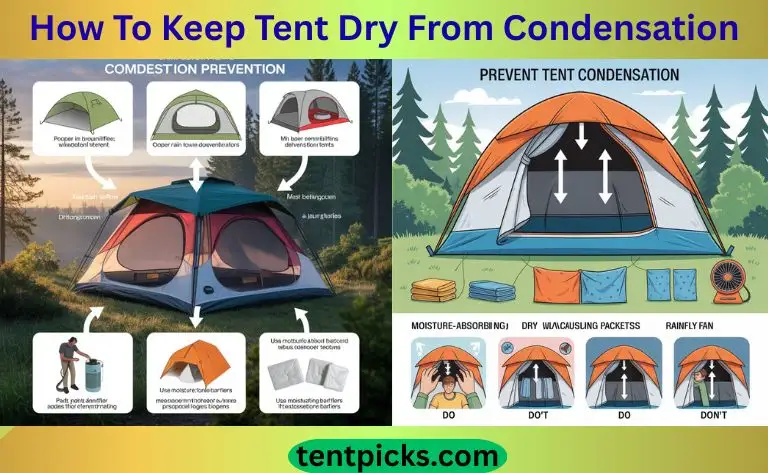
- Choose a double-wall tent. The inner mesh and outer fly create an air gap. This gap helps vapor escape before it hits you.
- Get a fly with big vents. Peak vents, kickstand vents, or adjustable doors help a lot.
- Bring a footprint. A groundsheet blocks ground moisture from rising into the tent.
- Use a high-loft, quick-dry bag. Down with hydrophobic treatment or quality synthetic helps keep warmth when damp.
- Carry a small microfiber towel. Wipe walls fast in the morning or during the night.
- Pack two sacks for wet gear. Keep wet layers in a sealed bag outside the sleeping area.
- Consider a bivy liner or inner tent liner. Some brands sell liners that collect droplets away from you.
How To Keep Tent Dry From Condensation
Pro tip from the field: When I switched from a small single-wall to a roomy double-wall with two vents, my nightly drip problem dropped by more than half.
How To Keep Tent Dry From Condensation? Site Selection And Setup Tactics
Where and how you pitch your tent sets the stage for a dry night.
- Avoid low spots. Cold air and fog pool in dips and near creeks.
- Skip lush grass at dawn. It breathes moisture all night.
- Use a light breeze. Face a vent or door into the wind for steady airflow.
- Aim for morning sun. Dry your fly faster after daybreak.
- Tension the rainfly. Tight fabric sheds droplets and keeps the inner from touching the fly.
- Leave ground gaps. A two-finger gap under the fly allows air to flow in and out.
Personal note: On a fall trip in the Pacific Northwest, I moved my tent 30 yards onto a slight rise. Wind kissed the fly and the morning was much drier, even with the same dew.
Ventilation: How To Move Moist Air Out
Airflow is your best friend. Make it easy for humid air to leave.
- Open high and low. Crack a roof vent and a low door zip. This creates a chimney effect.
- Use two doors if you have them. Cross-venting clears vapor faster.
- Adjust the fly mid-night. If rain stops, open the vestibule a bit.
- Keep mesh clear. Don’t press bags or jackets against mesh panels.
- Manage wind direction. Turn the tent so intake is on the windward side and the exhaust vent is leeward.
Cold nights tip: A small gap still helps. Even a one-inch opening can reduce drip without freezing you.
Smart Habits Inside The Tent
Your routine changes how much water you make indoors.
- Change into dry sleep clothes. Wet layers add tons of vapor.
- Store wet gear in the vestibule. Don’t hang it above your head.
- Cook outside. Steam from meals spikes humidity fast.
- Limit breathing into the bag. A draft collar helps. Don’t bury your mouth in the bag.
- Keep lids on bottles. Even open water adds a little moisture.
- Wipe as you go. If you see beads on the fly, give it a quick wipe with a towel.
From experience: I used to cook ramen in my vestibule with the door barely open. My ceiling rained by 9 p.m. Now, I cook outside or crank the door wide, and the tent stays dry.
Night And Weather Scenarios: What To Do
Make small tweaks based on the forecast.
How To Keep Tent Dry From Condensation
Clear, cold night:
- Expect heavy dew. Vent high and low. Pitch on a slight rise. Use a footprint and keep the fly gap open.
Humid, warm night:
- Open every vent. Roll back a vestibule if no rain. Sleep with mesh doors closed for bugs and the fly cracked for air.
Rainy night:
- Vent at the leeward side. Keep the fly tight. Use the smallest safe openings. Wipe walls if drops start to form.
Snowy night:
- Prevent frost buildup. Keep a small gap open. Knock frost off the fly before it melts at sunrise.
Drying And Maintenance On The Go
Moisture is a journey, not a one-time fix. Keep up the routine.
- Morning dry-out. Shake the fly. Drape it on a bush or trekking poles while you make coffee.
- Midday sun break. If you stop for lunch, spread the fly to air it out.
- Pack smart. Put the wet fly in an outside pocket. Keep the inner tent dry inside your pack.
- Clean and reproof. Wash the fly with a tent-safe cleaner and refresh the DWR. Good beading means less sticking and fewer drips.
- Check seams and vents. Broken toggles or bent struts ruin airflow.
Field lesson: I started packing my fly in a separate dry bag. My inner tent and sleeping bag stayed crisp even after a wet night.
How To Keep Tent Dry From Condensation? Advanced Tips And My Field Lessons
When the basics are dialed, try these extra steps.
- Use a small, battery fan. A quiet clip-on fan moves enough air to cut condensation on still nights.
- Add a tent liner. It catches droplets and keeps them from misting your face.
- Warm the air, not the walls. A hot water bottle at your feet warms you, not the tent shell, which helps prevent wall contact.
- Know the dew point. If the forecast shows temperature near dew point, expect more condensation. Plan extra venting.
- Choose breathable fabrics. Inner mesh or breathable polyester helps vapor move out faster than solid nylon.
Data-backed insight: Laboratory tests and field studies agree that a temperature difference plus high humidity is the core driver of condensation. Increased ventilation and reduced internal moisture load are the most effective controls in real use.
Frequently Asked Questions Of How To Keep Tent Dry From Condensation
Why is my tent wet inside even when it didn’t rain?
Condensation is the cause. Warm, moist air inside hits cool walls and turns to water. Improve airflow and reduce indoor moisture to fix it.
Do single-wall tents always have more condensation?
They often do. Single-wall designs lack the air gap of double-wall tents. With solid venting and smart habits, you can still manage it well.
Should I keep the rainfly off to stop condensation?
Only if it’s dry and mild. The fly helps manage airflow and shields from dew. Use the fly, but open vents and doors as conditions allow.
Will a footprint help reduce condensation?
Yes. It blocks ground moisture and keeps the inner floor warmer and drier. It also protects the base from cold, wet soil.
Is it okay to wipe the inside walls at night?
Yes. Use a small microfiber towel. It’s a fast way to remove moisture and keeps drips from soaking your gear.
Does boiling water inside the vestibule cause condensation?
Yes. Steam adds a lot of water vapor. Cook outside or open the vestibule wide if you must cook near the tent.
What’s the best quick fix at 3 a.m. when the ceiling drips?
Crack a high vent and a low zip to start a small draft. Wipe the walls. Move wet gear to the vestibule. Stay warm and let air do the rest.
Conclusion
You can’t stop condensation from forming in nature, but you can keep the tent dry where it counts. Choose smart gear, pitch in the right spot, open vents high and low, and keep wet items out of your sleeping zone. Small habits add up to big comfort.
Try one change on your next trip: set the fly with a ground gap and crack a roof vent. You’ll feel the difference by dawn.
Want more trail-proven tips? Subscribe for new guides, share your own tricks in the comments, and keep your nights dry and warm.






6 Comments